
Summary:
Real estate termite inspections protect property value and prevent surprise repair costs during escrow. In competitive markets, buyers and sellers rely on clear pest reports before closing. Professional evaluations often lead to timely Fremont termite treatment plans that address active infestations and structural risks. This guide explains inspection steps, repair negotiations, timelines, and prevention strategies in simple terms.
Termites and Escrow Delays: What Buyers and Sellers Need to Know
One hidden termite colony can delay a home sale faster than any pricing mistake. Real estate deals move quickly, yet termite activity can slow everything down. Buyers want reassurance that the structure stands strong. Sellers want smooth closings without last-minute repair stress.
A detailed inspection provides clarity and direction before paperwork becomes final. In some cases, buyers also ask about broader pest history, including past services from a mouse exterminator in San Jose, especially when reviewing disclosures in competitive markets.
Homes face steady termite pressure due to mild weather and wood-framed construction. Drywood termites hide inside beams and attic framing. Subterranean termites build mud tubes along foundations.
Many transactions include inspection contingencies, so timing matters. Early scheduling helps prevent escrow delays and unexpected repair negotiations.
Why Termite Inspections Matter During Escrow
Escrow periods often feel rushed. Inspections add structure and protection to the process. A termite report outlines visible damage, active infestation signs, and areas that need correction. Buyers use this information to plan repairs or request credits. Sellers gain an opportunity to resolve issues before closing.
Termite damage reduces structural strength over time. Floor joists, window frames, and support posts weaken slowly. Damage often stays hidden behind drywall. Real estate inspections bring those hidden issues into the open. Transparency builds trust between both parties.
What Inspectors Look for Inside and Outside the Home
Licensed inspectors follow a systematic approach. They examine foundations, crawl spaces, attics, and garages. Exterior siding and wooden trim receive close attention. Moisture levels around the property also influence termite activity.
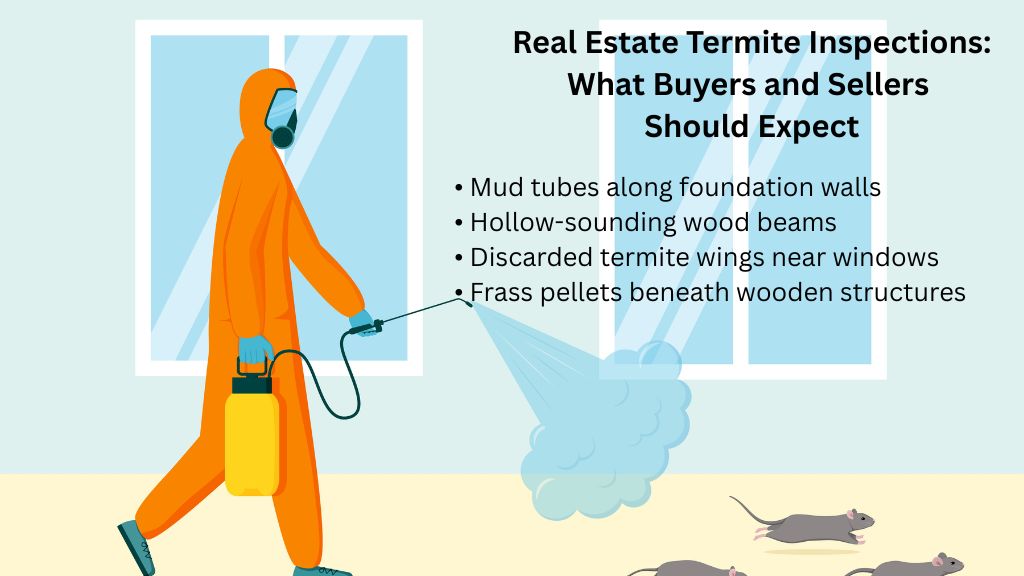
Common findings include:
• Mud tubes along foundation walls
• Hollow-sounding wood beams
• Discarded termite wings near windows
• Frass pellets beneath wooden structures
Inspectors also note earth-to-wood contact. Wooden fences attached directly to the soil increase risk. Deck posts without protective barriers invite colony formation. Clear documentation supports fair negotiations.
How Buyers Should Prepare for a Termite Report
Buyers often feel anxious about inspection results. A calm approach helps. Minor damage does not always mean structural failure. Many homes show signs of past activity without active colonies. Reports typically separate active infestation from old damage.
Next, buyers should review repair estimates carefully. Treatment costs vary based on infestation size and location. For example, localized drywood colonies require spot treatment. Subterranean termites often demand broader soil treatments. Professional evaluation helps determine the correct solution.
Seller Responsibilities Before Listing
Smart sellers schedule inspections before placing a home on the market. Pre-listing evaluations prevent surprises later. Repairs completed early allow stronger negotiation positions. Buyers feel confident when documentation shows completed treatment.
In competitive areas, homes that present clean pest reports stand out. Real estate agents often recommend early termite clearance letters. A proactive approach avoids rushed repairs during escrow. Clear communication keeps transactions moving smoothly.
Treatment Options After a Positive Inspection
Treatment plans depend on the termite species and the extent of damage. Localized drywood infestations may involve wood injections or foam applications. Subterranean termites require soil barrier treatments around foundations. Severe cases may involve structural wood replacement.
Many homeowners in the area rely on professional Fremont termite treatment services for effective colony control. Proper treatment stops feeding activity and reduces future risk. Licensed technicians also provide clearance reports needed for closing.
Costs vary based on property size and infestation scope. Repair negotiations often involve credits or shared expenses. Clear estimates reduce tension during escrow. Both parties benefit from transparent pricing and timelines.
Common Delays and How to Avoid Them
Delays often happen when inspections occur too late. Scheduling early prevents rushed treatment appointments. Another common issue involves inaccessible crawl spaces. Inspectors need safe entry points to complete thorough evaluations.
Moisture damage sometimes complicates reports. Leaks under sinks or around roofs create wood rot. Inspectors must separate rot from termite damage. Proper documentation clarifies repair priorities.
Open communication between agents, inspectors, and pest professionals reduces misunderstandings. Everyone shares the same goal: a successful closing without structural surprises.
The Role of Pest Control in Property Value
Termite protection supports long-term property value. Regular inspections protect wooden framing and load-bearing beams. Prevention costs far less than structural repairs. Buyers often ask for proof of ongoing maintenance.
Some homeowners also request rodent evaluations during transactions. For example, buyers relocating from urban areas sometimes ask about a mouse exterminator in San Jose when reviewing pest control history. Comprehensive pest management adds confidence during negotiations.
Integrated pest control plans combine termite monitoring, moisture control, and structural sealing. This approach protects homes beyond the initial inspection stage.
Preventive Measures After Closing
New homeowners should treat termite prevention as an ongoing responsibility, not a one-time task. Annual inspections help detect early activity before structural damage spreads. Small warning signs, like faint wood tapping sounds or tiny mud tubes, are easier to manage when caught early. Regular monitoring keeps repair costs predictable and manageable, and timely Fremont termite treatment can stop minor activity before it turns into structural repairs.
Landscaping choices also play a major role in prevention. Trim shrubs away from exterior walls to improve airflow. Keep mulch and soil several inches below wooden siding to limit moisture contact. Firewood stacks should sit off the ground and away from the home.
FAQs: Real Estate Termite Inspections
Q1: How long does a real estate termite inspection take?
A1: Most inspections take one to two hours, depending on property size. Inspectors review interior and exterior areas, crawl spaces, and attic framing to document visible damage and activity signs.
Q2: Can a home sale proceed with active termites?
A2: Yes, sales can proceed, yet treatment usually occurs before closing. Buyers may request repairs, credits, or professional clearance documentation prior to finalizing escrow.
Q3: Are termite inspections mandatory in California real estate transactions?
A3: Inspections are not always legally required, yet lenders and buyers commonly request them. Many escrow agreements include pest contingencies to protect both parties.
Q4: How much does termite treatment cost during escrow?
A4: Costs vary based on infestation type and property size. Localized treatments cost less than full perimeter soil applications. Professional estimates provide accurate pricing before negotiations.
Q5: What is included in a termite clearance report?
A5: A clearance report confirms that active infestation has been treated. It outlines completed services and notes any recommended repairs for structural safety.
Q6: Can old termite damage fail an inspection?
A6: Old damage alone does not always stop a sale. Inspectors distinguish inactive damage from current activity. Buyers often negotiate repair credits for structural corrections.
Q7: How often should homeowners schedule termite inspections after purchase?
A7: Annual inspections provide ongoing protection. Regular monitoring identifies early activity before structural damage spreads through framing or support beams.
Q8: Does termite treatment increase property resale value?
A8: Documented treatment history builds buyer confidence. Proof of professional care supports stronger resale positions and smoother negotiations.
Secure Your Closing With Habitat Pest Control
Real estate transactions require clarity and timely action. Habitat Pest Control supports buyers, sellers, and agents with detailed inspections and clear reporting. We provide effective termite solutions, preventive guidance, and honest estimates. Our team also coordinates services such as a trusted mouse exterminator in San Jose when broader pest concerns arise during escrow.
We work closely with closing timelines to avoid delays and last-minute stress. When structural safety matters most, we stand ready to protect your investment and keep your transaction moving forward.