
Summary-
Termites cause an estimated $6.8 billion in property damage across the U.S. every year, and most of it happens before anyone notices a thing. The first few hours after spotting signs matter more than most homeowners think. This blog covers exactly what to do right after discovery, what to avoid, and when professional termite treatment in Atherton becomes the only real option.
By the Time You See It, Termites Have Been There a While
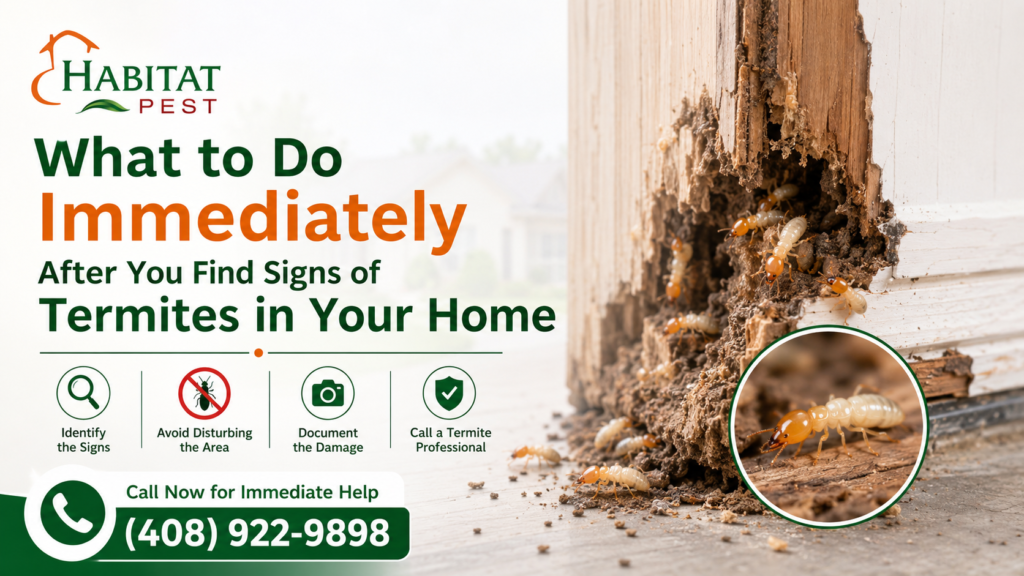
Termites don’t announce themselves. They work from the inside out, hollowing wood and weakening structural beams for months before most homeowners notice anything unusual. So when the signs do appear, a pile of discarded wings near a windowsill, mud tubes climbing the foundation, or wood that sounds hollow when tapped, the infestation is almost always further along than it looks. The first hour after discovery matters more than most people realize.
Recognize What You’re Actually Looking At
Different termite signs point to different species, and that distinction directly affects how the problem gets treated during a professional termite inspection and termite treatment in Atherton. Mud tubes are pencil-thin tunnels built by subterranean termites along walls and foundations to travel between their underground colony and food sources.
Frass, the grainy wood-colored pellets drywood termites push out of kick-out holes, is often mistaken for sawdust or wood debris. Discarded wings near doors or windowsills mean reproductive swarmers have recently left a mature colony to start new ones, which is never a sign to ignore when dealing with a potential termite infestation or planning termite treatment in Atherton.
The First Thing You Must Not Do
The instinct is to poke at the damage, spray a store-bought product, or scrape away mud tubes. All three cause real harm. Disturbing the area scatters termites deeper into the structure, making the colony’s extent much harder to assess.
Over-the-counter sprays kill surface workers but leave the colony untouched, and they can contaminate the area and reduce the effectiveness of professional treatments applied afterward. Leave everything as you found it. Take photos of the location, the damage, and any mud tubes or frass for documentation.
Step Two Is a Professional Inspection, Not a Second Opinion
A licensed termite inspection is the only reliable way to understand what you’re dealing with. This isn’t a general pest check. It’s a structural assessment covering crawl spaces, attic framing, subfloor areas, and the full foundation perimeter. Inspectors identify the species, locate the extent of activity, and assess structural damage.
Delaying this step is where homeowners lose the most ground. Termite colonies grow continuously, and a colony left unchecked for even a few additional weeks can expand its damage significantly.
Understanding Your Treatment Options Before You Agree to Anything
• Liquid termiticide barrier: A trench is dug around the foundation and termiticide is applied to the soil. Subterranean termites passing through the treated zone are eliminated and carry the chemical back to the colony through the transfer effect. Liquid barriers from reputable products last several years before reapplication is needed.
• Bait station systems: Stations containing cellulose material and a slow-acting termiticide are placed around the property. Worker termites consume the bait and share it with colony members, gradually reducing the population. This method works well for subterranean species and causes minimal disruption to the property.
• Localized wood injection: For drywood termites in a confined area, termiticide foam or dust is injected directly into the infested wood through small drilled holes. Effective for smaller, localized infestations that haven’t spread widely.
• Fumigation: The whole-structure treatment reserved for widespread drywood termite infestations. A tent is erected over the building, and fumigant gas permeates every area of the structure. More intensive and requires temporary evacuation, but provides comprehensive elimination when the infestation is severe.
The species determines everything. Drywood and subterranean termites require completely different approaches. Using the wrong method wastes time and money while the colony keeps feeding. Proper termite treatment in Atherton or any other area begins with accurate species identification, never guesswork.
What to Check While You Wait for the Inspection
Once the inspection is booked, there are a few things you can do around the property that won’t disturb evidence but will help reduce conditions that attract termites.
Check for moisture issues. Subterranean termites are strongly drawn to damp wood and wet soil. A leaking pipe under the kitchen sink, poor drainage near the foundation, or a clogged gutter sending water down the exterior wall all create ideal conditions for termite activity. Addressing moisture sources doesn’t treat the existing infestation, but it removes a core attractant and helps any future treatment work more effectively.
Check for wood-to-soil contact around the property. Wooden fence posts sitting directly in soil, firewood stacked against the exterior wall, or mulch piled against the foundation all serve as direct entry bridges for subterranean termites. Moving these away from the structure is a practical step that costs nothing and reduces ongoing risk.
How Quickly Does Termite Damage Actually Progress
A mature subterranean colony can contain over one million workers and consumes roughly a pound of wood every month under active conditions. Over a single year, which translates to compromised floor joists, structural framing, and load-bearing walls damaged from the inside, with nothing visible on the surface.
Drywood colonies are smaller but nest directly inside the wood they consume. Either way, every week without proper termite treatment adds measurably to both the structural damage and the eventual repair cost.
The Questions That Come Up Every Time Someone Finds Termites
Q1. How do I know if termite activity is current or old?
A1. Active signs include moist intact mud tubes, live workers in wood, and fresh frass. Dry, crumbling tubes and no live termites suggest old damage. A professional inspection confirms activity status.
Q2. Can store-bought products treat termites effectively?
A2. No. They kill surface workers but leave the colony untouched, often scattering termites deeper. Professional-grade termiticides require proper equipment and aren’t available over the counter.
Q3. How long does a termite inspection take?
A3. Most inspections take one to two hours for an average home, covering interior framing, foundation perimeter, crawl spaces, attic, and all accessible structural wood.
Q4. Does termite treatment damage landscaping?
A4. Liquid barriers require foundation trenching but cause minimal lasting disruption. Bait stations are the least invasive option. Fumigation requires temporary evacuation but leaves no residue after aeration.
Q5. Does homeowners’ insurance cover termite damage?
A5. Most policies don’t. Termite damage is classified as a preventable maintenance issue. Some pest control service contracts provide limited damage coverage. Check your policy directly.
Q6. How do I know if termites caused structural damage?
A6. Soft or spongy floors, sticking doors and windows, buckling walls, and wood that crumbles under light pressure are all indicators. A structural engineer assessment may follow severe infestations.
Q7. What’s the difference between a termite swarm and a flying ant?
A7. Termite swarmers have straight antennae, equal-length wings, and no pinched waist. Flying ants have bent antennae, unequal wings, and a distinctly pinched waist. An ant exterminator in San Jose or a termite specialist can confirm identification fast.
Q8. How soon do results appear after treatment?
A8. Liquid barriers work immediately on contact but take weeks for full colony elimination. Bait systems take two to three months. Fumigation delivers immediate whole-structure results.
Don’t Let the Clock Run While Termites Keep Working
Termite damage compounds quietly, and every day without a clear answer is another day the colony keeps feeding.
The smartest move after finding signs isn’t researching treatment options online; it’s getting a licensed professional into the structure before the picture gets worse. This is where Habitat Pest Control comes in. We start with a thorough inspection that goes well beyond what’s visible on the surface.
Also, we find what’s actually driving the problem, confirm the species, and build a termite treatment plan in Atherton eliminating the colony at its source. That’s the difference between fixing a problem and just interrupting it temporarily.