
Summary:
Homes built near open land, greenbelts, or creek corridors face constant rodent pressure. Wildlife movement pushes rats and mice toward warm structures year-round. Strategic exclusion reduces entry risks and prevents structural damage. Professional rodent control in San Jose, CA, and targeted sealing strategies protect foundations, rooflines, crawl spaces, and attic voids from repeat infestations.
Nightly Rodent Movement From Fields to Foundations
Homes near open fields face rodent pressure almost every night. Natural habitats support rats, mice, and other wildlife that search for food and shelter. When temperatures shift or water levels change, rodents move toward nearby houses. That migration pattern makes structural sealing a top priority. Effective rodent control in San Jose, CA, starts long before scratching sounds begin inside walls.
Properties close to creek areas often experience seasonal surges. Tall grass, dense shrubs, and water sources support nesting colonies. As populations grow, rodents expand outward. Residential structures become convenient shelter zones. Exclusion planning addresses that predictable movement with long-term prevention in mind.
Why Open Land Increases Rodent Activity
Open fields provide cover and food sources. Fallen seeds, insects, and organic debris support rodent survival. Creek banks offer moisture and dense vegetation. These natural buffers create ideal breeding conditions.
As colonies expand, young rodents search for new territory. Homes on the perimeter become easy targets. Attics offer warmth. Crawl spaces provide darkness. Garages contain stored food and cardboard boxes. Without strong barriers, entry becomes simple.
Understanding Rodent Travel Patterns
Rodents rarely move randomly. They follow edges like fences, retaining walls, and foundation lines. Utility pipes and irrigation lines also guide movement.
For example, a rat may travel along a fence line, climb a tree, and jump to a roof edge. Small gaps under eaves allow attic entry. Once inside, wall voids create hidden pathways. Understanding these routes helps create stronger exclusion plans.
Common Entry Points Near Creekside Homes
Inspection reveals repeated structural vulnerabilities. Homes near open space often share similar weaknesses.
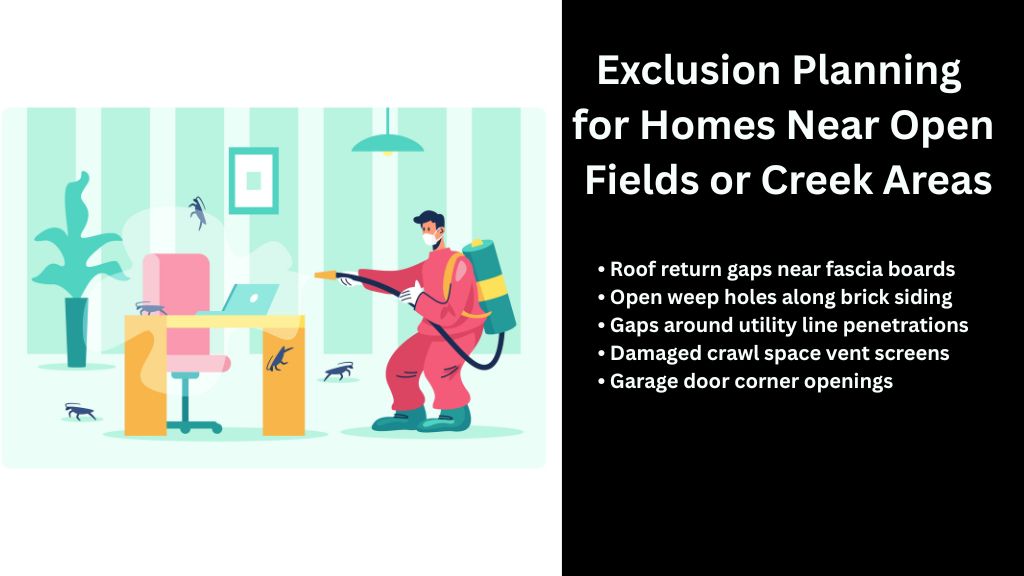
Frequent entry areas include:
• Roof return gaps near fascia boards
• Open weep holes along brick siding
• Gaps around utility line penetrations
• Damaged crawl space vent screens
• Garage door corner openings
Each opening may look minor. Rodents only need small gaps to enter. Sealing requires durable materials, not temporary foam.
The Role of Structural Sealing in Exclusion Planning
Structural sealing forms the backbone of any strong exclusion strategy. Exclusion focuses on blocking access rather than reacting after infestation. Professional sealing uses metal flashing, hardware cloth, steel mesh, and reinforced vent covers that resist gnawing pressure. These materials hold up against sharp teeth and harsh weather conditions. Temporary fillers break down quickly, which allows rodents to return within weeks.
Technicians perform detailed inspections along rooflines, attic vents, chimney gaps, garage perimeters, and foundation seams. Next, they close vulnerable areas using chew-resistant barriers secured tightly in place. Even small quarter-inch openings receive attention.
Strong sealing disrupts migration patterns from nearby open land and forces rodents to move elsewhere. Long-term success depends on complete coverage, not partial patchwork repairs that leave hidden gaps behind.
Many homeowners rely on rodent exclusion services in San Jose to complete comprehensive structural sealing that addresses both visible and concealed risks. Detailed inspections often uncover weaknesses around utility penetrations and aging vent screens that homeowners rarely notice during routine maintenance.
Landscaping Adjustments That Support Exclusion
Outdoor maintenance directly shapes rodent movement patterns. Dense ivy pressed against exterior walls creates perfect hiding zones. Overhanging tree branches act like bridges to rooftops. Thick shrubs near foundations allow rodents to travel unseen. Small landscaping choices can quietly increase vulnerability.
Property owners should consider:
• Trimming branches at least three feet from the rooflines
• Removing heavy ground cover near foundations
• Storing firewood off the ground and away from walls
• Clearing debris along fence lines
Each step reduces shelter opportunities and travel pathways. Open, visible yard space discourages nesting near structures. Combined with structural sealing, landscaping adjustments create layered protection. This approach limits both access and attraction, which strengthens overall rodent prevention.
Crawl Spaces and Moisture Control
Creek proximity often increases ground moisture. Damp soil attracts insects, which attract rodents. Crawl spaces become vulnerable zones.
Sealing vent gaps and installing reinforced screens prevents intrusion. Vapor barriers reduce humidity levels. Proper drainage directs water away from foundations. Dry conditions discourage nesting activity.
Moisture management supports exclusion success. Ignoring damp areas weakens protective measures.
Attic Protection Strategies
Attics remain common nesting sites for homes located near open land. Insulation provides warmth and soft bedding material. Quiet upper spaces allow rodents to reproduce undisturbed for weeks. Early prevention limits expensive insulation replacement and wiring damage.
Technicians carefully inspect ridge vents, gable vents, roof returns, and soffit gaps. Reinforced vent covers block entry while maintaining proper airflow for ventilation systems. Sealing fascia gaps and installing chimney caps prevents climbing access from exterior walls or nearby trees.
After exclusion work, monitoring confirms success. Motion cameras, tracking dust, and periodic attic checks help verify that activity has stopped. Ongoing inspection supports lasting protection and keeps small problems from returning.
Monitoring After Initial Exclusion Work
Rodent populations near fields remain active year-round. Monitoring remains important even after sealing.
Professionals may install tamper-resistant bait stations along perimeter zones. These devices track population movement. Data helps adjust prevention strategies.
Maintenance visits ensure barriers remain intact. Weather and natural wear can weaken seals over time. Regular checkups maintain effectiveness.
Why DIY Methods Often Fail Near Natural Habitats
Store-bought traps and bait address only visible rodents. They do not block entry routes hidden along rooflines, crawl space vents, or utility gaps. Homeowners may catch one or two rats, yet others continue entering through the same openings. This cycle creates frustration and repeated sightings.
In high-pressure environments near creeks and open fields, new rodents quickly replace removed ones. Surrounding colonies remain active and constantly search for shelter. Without structural sealing, infestations return within weeks.
Rodent exclusion services in San Jose target entry points, nesting zones, and travel paths. Long-term results depend on detailed inspection, reinforced barriers, and durable repairs that withstand weather and gnawing.
FAQs: Exclusion Planning Near Open Land
Q1: Why do homes near creeks experience more rodent issues?
A1: Creek areas provide water, food, and shelter for wildlife. Growing rodent populations expand toward nearby houses seeking warmth and indoor nesting space.
Q2: What is rodent exclusion?
A2: Rodent exclusion involves sealing structural entry points using chew-resistant materials to prevent rats and mice from entering homes. It focuses on prevention rather than removal alone.
Q3: How often should Creekside Homes schedule inspections?
A3: Properties near open land benefit from annual inspections. High activity zones may require biannual evaluations to maintain barrier integrity.
Q4: Can landscaping really reduce rodent pressure?
A4: Yes, trimming vegetation and removing ground cover limits hiding areas. Open space around foundations reduces easy access routes.
Q5: Are attic vents common rodent entry points?
A5: Attic vents frequently allow entry if the screens weaken. Reinforced vent covers block intrusion while preserving airflow.
Q6: Do bait stations solve rodent problems alone?
A6: Bait stations monitor and reduce populations. Structural sealing remains essential to prevent ongoing entry.
Q7: How long does exclusion work last?
A7: Properly installed metal barriers can last many years. Regular inspections ensure seals remain intact against weather damage.
Q8: What signs indicate failed exclusion barriers?
A8: New droppings, scratching sounds, and gnaw marks near sealed areas may indicate breaches requiring repair.
Strengthen Your Home’s Natural Defenses Today
Habitat Pest Control provides customized exclusion strategies for homes bordering open fields and creek corridors. Our approach to rodent control in San Jose, CA, focuses on long-term structural protection, not short-term trapping. We understand local rodent migration patterns and common structural weak points found in creekside properties.
Our team delivers thorough inspections, durable sealing solutions, and proactive monitoring plans. Each service plan is built around prevention that lasts, not temporary fixes. When you want stronger protection for your property, we are ready to secure every entry point and restore peace of mind.