
Summary:
Rats pose serious risks to your property and physical well-being by spreading diseases and causing fire hazards. Protecting your space requires expert knowledge and proactive measures. If you’re dealing with an infestation, a professional rat pest control service can secure your environment. Learning about rodent proofing in San Jose helps homeowners prevent these furry intruders from returning.
The Unseen Danger Under Your Floorboards
A single pair of rats can turn into nearly half a thousand offspring in just one year. It sounds like a horror movie plot, but for many homeowners dealing with a rat infestation, it’s a real problem. These clever critters aren’t just a nuisance- they cause serious damage that often requires professional rat pest control. Rats move through walls, chew electrical wiring and insulation, contaminate food, and leave behind droppings that pose real health risks.
Rats have lived alongside humans for centuries, yet we still struggle to keep them out. They’re masters of disguise and experts at finding the tiniest cracks in your foundation. Understanding why they’re dangerous is the first step toward reclaiming your peace of mind.
Why Your House Is a Giant Chew Toy
Rats have teeth that never stop growing. To keep them from getting too long, they must gnaw on hard materials every single day. Unfortunately, your house is made of exactly what they like to bite.
They often target wooden beams, plastic pipes, and insulation. When they chew on wood, they weaken the structure of your home. If they find a PVC water pipe, it can cause leaks that lead to mold and expensive water damage.
However, the biggest worry is your electrical system. Rats love the taste of wire insulation. When they strip those wires bare, it creates a massive fire risk. Many “unexplained” house fires are actually caused by rodents chewing through wires behind the drywall.
The Invisible Threat to Your Health
While the physical damage to your home is scary, the threat to your health is even worse. Rats are famous for carrying “hitchhiker” diseases. They don’t just bring themselves into your kitchen; they bring bacteria, viruses, and parasites.
You can get sick just by breathing in dust contaminated with their droppings or urine. This is how people contract Hantavirus, a serious respiratory illness. They also spread Salmonellosis, which is a type of food poisoning. If a rat crawls over your counters at night, it leaves behind germs that end up on your food or utensils.
Leptospirosis is another concern. It’s a bacterial disease that spreads through water or soil contaminated with rat urine. Even if you never see the rat, its presence in your crawlspace or attic can still put your family at risk.
Why Rats Love Northern California Homes
If you live in the Bay Area, you might notice that rats are a common neighbor. The climate is mild, and food is everywhere. Our local environment provides the perfect playground for Roof Rats and Norway Rats.
Roof rats are excellent climbers. They use overhanging tree branches to jump onto your shingles and slip into the attic. Norway rats prefer the ground. They dig burrows under concrete slabs or hide in woodpiles. Because our neighborhoods are often crowded, a rat problem in one yard can quickly become a problem for the whole block. This is why rodent-proofing in San Jose is such a popular topic among local homeowners who want to stay ahead of the curve.
Signals That You Have a Problem
Rats are nocturnal, so you might not see them during the day. However, they leave plenty of clues. You might hear scratching or scurrying sounds in the ceiling once the sun goes down.
Look for small, dark droppings that look like large grains of rice. You might also see smudge marks along the baseboards. Rats have oily fur, and as they run along the walls, they leave behind dark streaks. If your dog or cat is staring intensely at a specific spot on the wall or under the fridge, they might be tracking a scent you can’t smell yet.
The Difficulty of DIY Solutions
Many people head to the hardware store for traps and bait the moment they see a mouse or rat. While this might catch one or two, it rarely solves the whole problem. Rats are “neophobic,” which means they’re afraid of new things. They’ll often avoid a new trap for days until they’re sure it’s safe.
Store-bought poisons can also be dangerous if you have pets or small children. Furthermore, if a rat eats poison and dies inside your wall, the smell can become unbearable for weeks. Professional rat pest control service providers have the tools to find the nest and remove the colony safely without leaving you with a lingering odor.
The Secret to Long-Term Protection
Stopping rats isn’t just about catching the ones inside. It’s about making sure new ones can’t get in. This process is called exclusion. It involves sealing every gap larger than a quarter-inch.
You should check your vents, chimney, and the spots where pipes enter your home. Using materials like steel wool or hardware cloth is essential because rats can’t chew through metal. Trimming your trees so they’re at least six feet away from your roof also helps. If you remove their “highway” to your house, they’re much less likely to move in.
FAQs: Common Concerns About Rodent Dangers
Q1: How small a hole can a rat fit through?
A1: An adult rat can squeeze through a hole the size of a quarter. If their head fits, their body will follow. This makes rodent proofing in San Jose homes a detailed task that requires sealing even the smallest cracks.
Q2: Can rats swim up through my toilet?
A2: It’s rare, but it is physically possible. Rats are incredible swimmers and can hold their breath for several minutes. They can navigate sewer lines and pop up in places you’d least expect.
Q3: Is it safe to clean up rat droppings myself?
A3: You should be very careful. Never sweep or vacuum dry droppings, as this sends germs into the air. Always wear a mask and gloves, and wet the area down with a bleach solution first. Many people prefer hiring a rat pest control service to handle the cleanup safely.
Q4: Do ultrasonic repellers actually work?
A4: Most experts agree that these devices have little to no effect on long-term infestations. Rats may be annoyed at first, but they quickly get used to the sound and ignore it.
Q5: What’s the difference between a mouse and a rat?
A5: Rats are significantly larger and have thick, hairless tails, while mice have long, thin tails with a bit of fur. A young rat also has oversized paws and a blunt snout compared to a mouse.
Q6: Why do I have rats if my house is clean?
A6: Rats don’t only look for messes; they look for warmth, water, and shelter. Even the cleanest home can have an entry point or a leaky pipe that attracts them.
Q7: How long do rats live?
A7: In the wild, most rats live about one to two years. However, they reach breeding age in just a few weeks. This rapid life cycle means a small problem can become a massive infestation very quickly if you don’t take action.
Your Path to a Pest-Free Life
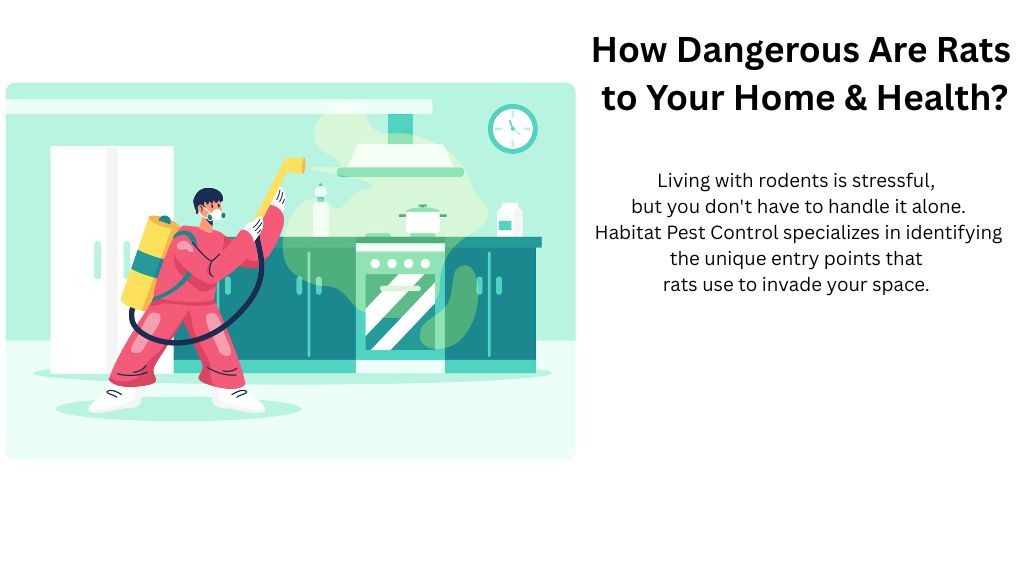
Living with rodents is stressful, but you don’t have to handle it alone. Habitat Pest Control specializes in identifying the unique entry points that rats use to invade your space.
Our rodent-proofing team in San Jose understands the local geography and the specific behaviors of California rodents. We use proven methods to clear out existing pests and prevent future generations from choosing your attic as their next nursery. It’s about protecting your property value and your family’s health with a plan that actually works.
Stop worrying about what’s crawling in your walls. Schedule a thorough inspection and see how we can help you stay safe.