
Summary
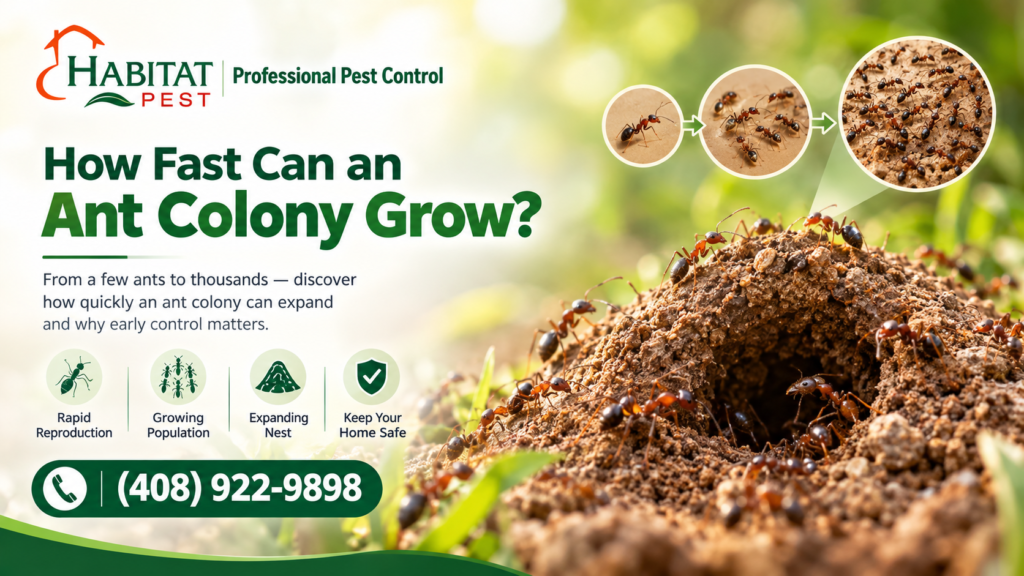
Ant colonies can grow from a small founding group into colonies with hundreds or thousands of workers. The pace depends on the species, temperature, food, moisture, nesting conditions, and number of queens. That is why a few ants inside a home may represent only a small visible part of a much larger colony nearby.
A Small Ant Problem Can Become Much Bigger
Ant colonies grow as queens produce eggs and workers care for each new generation. Some ant queens can live for years, allowing an established colony to continue expanding over time.
Killing the few ants you see does not necessarily affect the queen, brood, or workers inside the nest. The colony may be hidden in soil, landscaping, a wall void, beneath a slab, or around damp or damaged wood.
For recurring activity, the more useful question is not simply “How many ants do I see?” but “Where is the colony, and what is supporting it?”
How an Ant Colony Starts
Many ant colonies begin when a fertilized queen establishes a nest and lays her first eggs. She cares for the first brood until workers develop and begin taking over foraging and colony-maintenance tasks. The queen can then devote more energy to reproduction. (Penn State Extension)
Ants develop through four main stages:
• Egg
• Larva
• Pupa
• Adult
Workers feed and care for the developing brood. As the worker population increases, the colony gains more ants that can gather food, maintain the nest, and support future generations.
How Quickly Can the Numbers Increase?
There is no single growth rate for all ants. Development time varies by species and environmental conditions.
The original sources cited for this article describe development periods ranging from weeks to months for different species. Pavement ants may take roughly two to three months to develop, while carpenter ant development can also take around two months or longer under some conditions. (Penn State Extension)
This means colony growth is usually a gradual process rather than an overnight explosion. What changes quickly is often visibility: once workers discover a dependable food or water source, many ants may suddenly begin using the same trail.
What Makes Some Colonies Grow Faster?
Several conditions influence colony development:
Food availability. Different ant species use sugars, proteins, fats, insects, and other food sources.
• Moisture. Some species favor damp soil, leaks, decaying wood, or other moist environments.
• Temperature. Development and foraging activity change with temperature.
• Nest protection. A stable, protected nesting site can help a colony survive and expand.
• Number of queens. Some species have multiple queens, which can create larger or more complex colony networks. (Penn State Extension)
Because colony structure varies by species, identification matters when choosing a control strategy.
Why You May Suddenly See Hundreds of Ants
A sudden trail of ants does not necessarily mean the colony suddenly appeared.
The colony may have been developing nearby for weeks, months, or longer. A new food source, water source, weather change, or entry route can make workers much more noticeable inside the home.
The ants on a countertop are often only the foraging portion of the colony.
When Does an Ant Colony Become a Serious Problem?
A few ants outdoors are normal and do not automatically require treatment. Concern increases when ants repeatedly enter the home, appear in several rooms, return after cleaning, or continue despite basic prevention.
Carpenter ants deserve particular attention because they can establish nests in damp, damaged, or decaying wood. Mature carpenter ant colonies can contain thousands of workers, and winged reproductives generally appear only after a colony has matured. (Penn State Extension)
Repeated indoor activity is a reason to identify the species and investigate the source rather than simply spraying the ants that are easiest to see.
Why Killing Visible Ants May Not Stop Colony Growth
A contact spray may kill individual workers but leave the queen, eggs, larvae, pupae, and much of the worker population untouched.
Some ant-control programs use slower-acting baits so foraging workers have time to carry the material back toward the colony and share it with other ants. (Penn State Extension)
The appropriate method depends on the species, nest location, and surrounding conditions.
How Professionals Approach a Growing Ant Problem
A professional inspection looks for the pattern behind the activity. A technician may evaluate:
• Ant trails and entry points
• Food and water sources
• Cracks around doors, windows, and foundations
• Moisture problems
• Landscaping and outdoor nesting areas
• Damp or damaged wood
• Activity that may be coming from wall voids or other structural spaces
Species identification can help determine which treatment and bait formulations are most appropriate. (Penn State Extension)
For homeowners looking for an ant exterminator in San Jose or pest service in Santa Clara, this source-focused approach can help avoid repeated treatments that only reduce the visible ants.
What Homeowners Can Do
Basic sanitation and maintenance can make a property less attractive to foraging ants.
Clean food spills, store food in sealed containers, clean pet-feeding areas, manage garbage, and repair plumbing leaks. Outdoors, trim vegetation that touches the structure and remove unnecessary damp organic material near the foundation.
These steps can reduce resources and access, but they may not eliminate an established colony.
Ant Colony Growth Is About More Than Numbers
Ten ants in the kitchen may be ten individual ants, or they may be ten workers from a colony containing hundreds or thousands more.
The visible workers are part of a social system that may include one or more queens, developing brood, and many hidden workers. When that system has a suitable nest and dependable resources, activity can continue for a long time.
Early attention can make a recurring ant problem easier to diagnose and manage.
Ant Colony Growth: Common Questions
How fast can an ant colony grow?
Growth varies by species and conditions. Development from egg to adult may take weeks to months, and a colony can continue expanding over multiple generations.
How many ants can live in one colony?
Colony size varies widely. Some remain relatively small, while mature colonies of other species can contain thousands of workers. (Penn State Extension)
Can one queen produce thousands of ants?
Over a long lifespan, queens of some species can produce very large numbers of offspring. The exact number depends on the species and colony conditions.
Why are more ants suddenly appearing in my house?
A colony may already be established nearby. Workers can become much more visible after discovering food, water, or a new route into the structure.
Do ants reproduce inside a house?
Some species can establish nests inside buildings when suitable shelter, moisture, and food are available. Other indoor ants may be foraging from an outdoor nest.
Does killing worker ants kill the colony?
Usually not. Removing individual workers does not necessarily affect the queen or developing brood.
Can an ant colony have more than one queen?
Yes. Some ant species can have multiple queens. (Penn State Extension)
When should I call an ant professional?
Consider professional help when ants repeatedly return, appear in multiple areas, form established trails indoors, or seem to be coming from hidden structural locations.
Stop the Problem Before It Gets Bigger
An ant colony can continue growing even when only a few workers are visible. If ants keep returning, locating and addressing the source is more useful than repeatedly killing the ants on the surface.
Habitat Pest Control provides ant and general pest service in Santa Clara, San Jose, and surrounding South Bay communities. We can inspect the activity, identify likely sources, and recommend a treatment approach based on the species and location.