
Summary:
Modern homes rely on connected devices, hidden wiring, and constant power flow. Rodents see those wires as nesting material and chewing targets. Many homeowners seek Palo Alto rodent removal after smart systems fail without warning. Fast action, including help from a trusted mice exterminator in San Jose, protects security networks, automation hubs, and costly electronics.
Unseen Intruders Disrupting Connected Living Spaces
Smart homes depend on silent systems working behind the scenes. Security cameras, motion sensors, WiFi routers, and climate controls all connect through hidden wiring. Trouble begins when rodents enter wall cavities and attics. Many residents call for Palo Alto rodent removal only after alarms stop responding or cameras lose power.
Why Smart Homes Attract Rodents
Smart homes generate warmth from routers, battery backups, and electrical panels. Warmth draws rodents into enclosed areas. Insulated attics and structured wiring panels offer quiet shelter.
Rodents chew constantly to manage tooth growth. Electrical wires, plastic coatings, and fiber cables become easy targets. Nesting materials often include shredded insulation and cable sheathing.
Hidden spaces provide safety from predators. Once inside, rodents rarely leave on their own.
Chewed Wiring and Fire Hazards
Chewing strips insulation from electrical wires. Exposed copper creates short circuits. Sparks may form behind drywall or near attic beams.
Fire risk increases when multiple wires get damaged. Smart homes contain more low-voltage and data cables than older properties. Damage spreads across alarm systems, lighting controls, and internet lines.
Homeowners often notice flickering lights or random system resets. These warning signs signal deeper electrical trouble.
Security System Failures You Should Not Ignore
Security cameras depend on steady power and network connectivity. Rodent damage interrupts that flow. Motion alerts stop working without a clear reason.
Door sensors and window alarms may lose signal. False alarms or silent failures create confusion. Smart locks can also malfunction if internal wiring gets chewed.
Security gaps put families at risk. A disabled camera system leaves blind spots around the property.
Internet and Automation Disruptions
Smart thermostats, voice assistants, and lighting hubs rely on network stability. Rodents chewing on Ethernet cables weaken connection strength.
Homeowners may blame service providers for slow internet. In reality, damaged internal wiring disrupts data transmission. Streaming, remote work, and home monitoring systems suffer interruptions.
Automation routines fail without explanation. Lights stop responding, and climate settings reset randomly.
Hidden Costs of Delayed Action
Small chew marks lead to expensive repairs. Electricians must trace damaged wiring through walls. Insulation replacement adds to restoration costs.
Insurance claims may involve lengthy inspection processes. Some policies limit coverage for rodent damage. Financial impact grows when repairs overlap with security upgrades. Early intervention limits repair scope and protects home value.
How Rodents Move Through Smart Homes
Rodents travel along utility lines and conduit pipes as natural pathways. These lines guide them from exterior walls into attics and ceiling spaces. Cable entry points near rooflines often remain loosely sealed, creating simple access routes. Once inside, wall voids become hidden highways that connect rooms without detection.
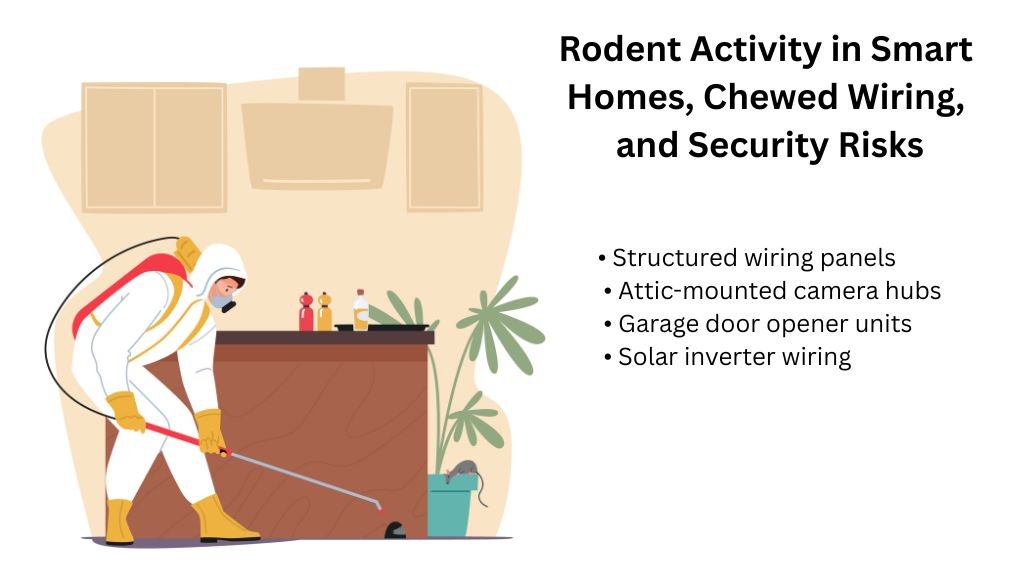
Common smart home risk zones include:
• Structured wiring panels
• Attic-mounted camera hubs
• Garage door opener units
• Solar inverter wiring
In addition, crawl spaces hide moisture and warmth that attract nesting behavior. These protected areas allow rodents to reproduce and expand without disturbance. Movement stays mostly silent at night, which delays detection and increases structural and electrical risks over time.
Signs Your Smart Home May Have Rodent Activity
Technology problems often signal pest presence before physical damage becomes visible. Sudden disruptions usually have a hidden cause. Homeowners should pay attention to unusual device behavior and small warning changes.
Watch for these red flags:
• Sudden WiFi drops in specific rooms
• Security cameras going offline overnight
• Burning or plastic odors near panels
• Scratching sounds above ceilings
Each sign points to possible cable damage or nesting activity nearby. Ignoring early signals allows chewing to continue behind walls. Over time, minor disruptions turn into major electrical repairs and compromised home security systems.
Professional Inspection and Removal
Professional pest teams inspect attic wiring and entry points carefully. They identify nesting zones and chewing patterns. Removal methods focus on safe trapping and exclusion.
A skilled mice exterminator in San Jose understands how rodents interact with wiring systems. Sealing structural gaps prevents return visits.
Midway intervention often saves thousands in electrical repairs. Structural sealing supports long-term protection.
Smart Home Prevention Measures
Homeowners can lower the risk of rodent damage by taking early action. Start by sealing roof vents, attic openings, and cable entry gaps with durable materials. Small cracks around conduit lines should be closed tightly to block access. Install metal mesh barriers around exposed wiring and utility penetration points to prevent chewing and nesting.
Keep storage areas organized and avoid loose cardboard piles that create hiding spots. Food items should stay in sealed containers, even in garages. Regular attic inspections help spot droppings, gnaw marks, or insulation damage before technology fails.
Then, schedule periodic pest assessments in high-tech neighborhoods. Prevention protects connected devices, electrical systems, and overall family safety.
Local Risk Factors in Palo Alto and San Jose
Tech-focused neighborhoods contain dense wiring networks that run through walls, attics, and crawl spaces. Homes often include advanced automation systems, backup batteries, EV chargers, and solar panels. Rodents treat these areas as warm shelter zones, especially near inverter boxes and cable clusters. Chewing damage often starts quietly behind smart control panels.
Mild climate supports year-round rodent activity, so nesting does not slowdown in winter. Landscaping that includes fruit trees, vegetable gardens, or steady irrigation creates reliable food and water sources.
Residents seeking Palo Alto rodent removal frequently report gnawed wires near security hubs and data panels. Urban density allows rodents to travel easily between neighboring structures.
Long Term Security and Structural Protection
Rodent exclusion forms the foundation of protection. Sealing access points blocks entry before damage begins. Regular monitoring detects new vulnerabilities early.
Electrical system inspections should follow any infestation. Upgrading damaged cables restores system reliability.
Smart homes require strong pest prevention plans. Protection supports safety, property value, and digital security.
Frequently Asked Questions About Rodents and Smart Wiring
Q1: Can rodents really damage smart home systems?
A1: Yes, rodents chew electrical and data cables. Damaged wiring disrupts security cameras, alarms, WiFi networks, and automation systems.
Q2: Why do rodents chew electrical wires?
A2: Rodents chew to control tooth growth. Plastic-coated wires feel similar to roots or branches, making them attractive chewing targets.
Q3: What are the early signs of rodent damage in a smart home?
A3: Random device shutdowns, flickering lights, weak WiFi signals, and scratching sounds in walls often signal hidden rodent activity.
Q4: Is Palo Alto rodent removal necessary for minor wiring damage?
A4: Early removal prevents colony expansion. Small damage often indicates larger nesting activity inside attics or wall voids.
Q5: How does a Mice Exterminator in San Jose protect wiring systems?
A5: Professionals remove rodents, seal structural gaps, and advise on protective barriers around vulnerable cables and panels.
Q6: Can rodent damage increase fire risk?
A6: Yes, exposed electrical wires may spark. Fire hazards grow when insulation and structural beams sit near damaged wiring.
Q7: Are smart homes more vulnerable than older homes?
A7: Smart homes contain more wiring and electronic hubs. Increased cable volume provides more chewing opportunities for rodents.
Q8: How often should smart homes schedule pest inspections?
A8: Annual inspections help detect early signs. Homes near green spaces may benefit from more frequent monitoring.
Protect Your Technology Before It Fails
Habitat Pest Control understands how vulnerable modern homes can be. We inspect, remove, and seal entry points to stop rodent activity at its source. Our team supports homeowners seeking reliable Palo Alto rodent removal and works closely with families who value safe, smart living. Strong prevention today avoids system failure tomorrow. Contact us and let us help secure your connected home.