
Summary
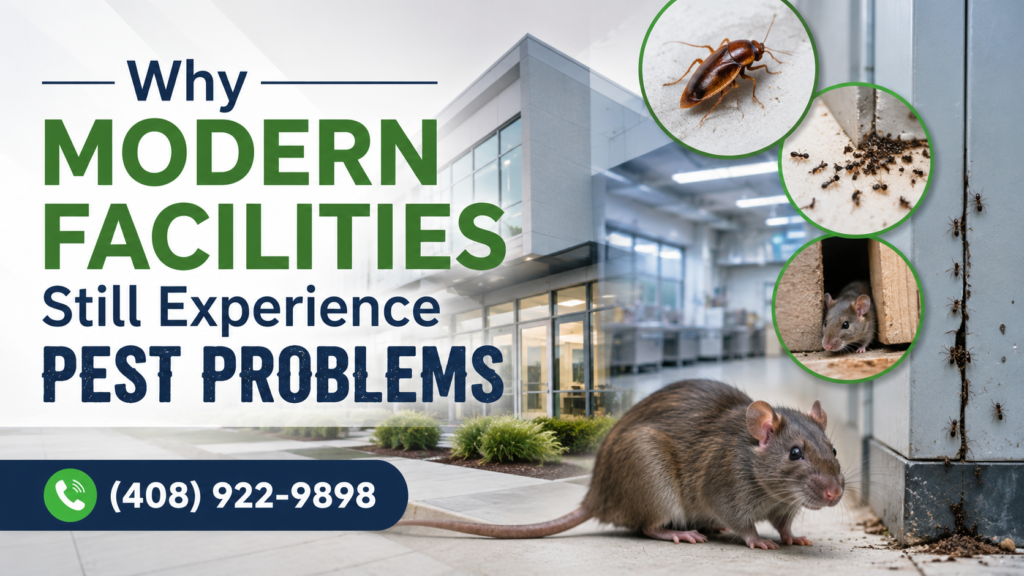
Pest problems in commercial spaces are more common than most business owners expect. Even well-maintained facilities deal with infestations that seem to come out of nowhere. Understanding the root causes helps you take smarter action. Whether you run a warehouse, office, or restaurant, Union City commercial pest service providers know that building age alone does not determine your risk level.
New Buildings, Same Old Infestation
Pests do not care how new your building is. A facility built last year can have just as many pest issues as one built in the 1980s. That surprises a lot of business owners, but it makes complete sense once you understand how pests actually behave. Construction quality, human activity, and environmental pressure all play a role, and none of them can be solved just because a building is modern.
The Hidden Entry Points No One Thinks About
Modern buildings are designed for energy efficiency, but that same design can create pest entry points. HVAC systems, utility conduits, and pipe chases run through walls and floors, creating gaps that are rarely sealed completely. Insects and rodents use these channels as highways. A gap as small as 6mm is enough for a mouse to squeeze through, and most facilities have dozens of them.
Delivery docks, loading bays, and employee entrances also see heavy foot traffic throughout the day. Doors stay open for extended periods, and pests walk right in. No alarm goes off. No sensor detects them. This is why Morgan Hill pest control specialists often focus on exclusion strategies and routine inspections, since identifying hidden access points remains one of the most effective ways to prevent infestations before they become established.
Why Food-Grade and Clean Facilities Are Not Immune
Many facility managers assume that strict sanitation eliminates pest risk. That is not accurate. Pests enter clean environments for shelter and moisture, not just food. Cockroaches, for example, thrive in areas with high humidity, even if there is nothing edible nearby. Silverfish feed on paper, cardboard, and glue, which exist in almost every office or storage area.
Rodents often move into facilities during colder months looking for warmth. Your building does not need to have a crumb on the floor to become attractive to them.
The Role of Landscaping and Green Infrastructure
Eco-friendly design and landscaping have become standard in newer commercial developments. Green roofs, rain gardens, planters near entrances, and ornamental bushes create ideal harborage zones for pests. Standing water in planters or drainage areas breeds mosquitoes. Mulch retains moisture and provides shelter for ants, earwigs, and ground beetles.
Here is what commonly goes unnoticed around modern commercial properties:
• Ivy or dense ground cover growing close to the building foundation
• Mulch depth exceeding 3 inches, which retains moisture and shelters insects
• Ornamental lighting near entrances, which attracts moths, flies, and beetles at night
• Tree branches touching the roofline, giving squirrels and roof rats direct access
• Standing water in decorative planters, which serves as a mosquito breeding site
None of these are design flaws on their own, but they combine to create pressure on the building’s exterior perimeter.
Supply Chains and Third-Party Vendors Bring Pests Inside
One of the most overlooked sources of commercial infestations is incoming shipments. Cardboard boxes, wooden pallets, and packaging materials can carry German cockroach egg cases, stored product insects, and rodent hitchhikers. A single infested delivery can introduce a breeding population inside your facility within weeks.
Third-party vendors, contractors, and cleaning crews move between multiple sites daily. Pest eggs and larvae can cling to equipment, tool bags, and footwear. Integrated Pest Management (IPM) protocols account for this, but many facilities skip vendor inspection steps entirely.
Structural Flaws That Develop Over Time
Even new buildings develop cracks, gaps, and moisture damage faster than people expect. Concrete expansion joints, caulk seals around windows, and weatherstripping all degrade. Within five to seven years, a building that once had a tight exterior shell starts to develop small vulnerabilities. These are enough for pests to exploit.
Flat roofs, common in commercial construction, often develop ponding water after rainfall. That moisture seeps into interior walls, creating conditions that attract termites and wood-boring beetles. The pest problem often shows up long after the structural issue has quietly been developing.
Pest Pressure From the Surrounding Environment
Urban and suburban development pushes wildlife out of natural habitats. Raccoons, opossums, rats, and feral cats move into commercial zones because green space is shrinking. Facilities near drainage channels, food processing plants, restaurants, or waste management sites face higher baseline pest pressure than those in isolated industrial parks.
Pest activity in neighboring businesses can also spill over. Rodent populations displaced by a fumigation next door will actively look for the nearest alternative shelter, and your facility could be it.
Technology Has Gaps Too
Some modern facilities rely on electronic pest monitoring systems, UV light traps, and automated bait stations. These tools are useful, but they are not standalone solutions. UV traps only catch flying insects that happen to pass near them. Rodent bait stations need regular servicing to remain effective. Electronic monitoring flags activity after pests are already inside, not before.
This limitation is one reason experienced Morgan Hill pest control professionals continue to prioritize routine inspections alongside technology. Technology supports pest management, but it does not replace trained inspection, identification, and targeted treatment. Facilities that rely entirely on devices often discover infestations later than those using regular human-led inspections.
People Often Ask: Pest Control in Commercial Facilities
Q1. Why do modern buildings still get pest infestations?
A1. Modern buildings have energy-efficient designs with utility channels, HVAC systems, and pipe chases that create hidden entry points. Pests exploit these gaps regardless of building age or cleanliness.
Q2. What pests are most common in commercial facilities?
A2. German cockroaches, rodents, stored product insects, ants, and flies are the most frequently reported pests in commercial environments. Silverfish and termites are common in offices and storage areas.
Q3. Can a clean facility still get a pest infestation?
A3. Yes. Pests enter buildings for moisture, warmth, and shelter, not only food. A spotless facility can still attract cockroaches, rodents, and silverfish under the right conditions.
Q4. How do pests enter through supply chains?
A4. Infested cardboard boxes, wooden pallets, and packaging materials can introduce cockroach egg cases, stored product beetles, and rodent droppings. Incoming shipments should be inspected before entering storage areas.
Q5. What landscaping features increase pest risk?
A5. Dense ground cover, deep mulch, ornamental lighting near entrances, standing water in planters, and tree branches touching the roof all increase pest pressure around commercial buildings.
Q6. How often should a commercial facility be inspected for pests?
A6. Most facilities should schedule professional pest inspections at least quarterly. High-risk environments like food processing plants, warehouses, and healthcare facilities may need monthly visits.
Q7. What is Integrated Pest Management and why does it matter?
A7. IPM is a science-based approach that combines monitoring, exclusion, sanitation, and targeted treatment to manage pests with minimal environmental impact. It is considered the industry standard for commercial pest control.
Q8. Are electronic pest monitoring tools enough on their own?
A8. No. Electronic tools support pest management but cannot replace trained human inspections. UV traps and bait stations miss many species and only detect activity after pests have already entered.
The Pest Problem No Modern Facility Can Afford to Ignore
Most businesses wait until a customer complains or a health inspector flags something before acting. That reactive approach is costly, both financially and reputationally. Pest problems stem from structure, environment, and supply chain exposure, not just cleanliness.
Habitat Pest Control takes an inspection-first approach to every commercial account. We identify where Morgan Hill pest control clients face the most risk and build programs around your specific facility, not a generic checklist.