
Summary:
Multi-unit properties face constant pest pressure due to shared walls, plumbing lines, and common trash areas. A structured plan prevents infestations from spreading between units and protects property value. Professional services such as Termite treatment in Atherton and Los Altos Hills pest control help property managers maintain safe, compliant, and tenant-friendly living environments across apartment and condominium communities.
Shared Walls, Shared Risks, The Reality of Pests in Multi-Unit Housing
One untreated unit can affect an entire building within weeks. Multi-unit residential properties operate like connected ecosystems. Shared walls, utility lines, and ventilation systems allow pests to travel quickly from one apartment to another.
Property managers cannot rely on single-unit treatments. In many cases, scheduling professional Termite treatment in Atherton as part of a broader building plan helps prevent structural damage from spreading through connected framing. A building-wide pest control strategy protects tenants, reputation, and long-term property value.
Apartments, duplexes, and condominium complexes experience unique challenges. High tenant turnover increases exposure risks. Common laundry rooms, trash enclosures, and underground parking areas create ideal pest harborage zones.
Effective management requires proactive inspection schedules and clear communication between management and residents.
Why Multi-Unit Buildings Need Structured Pest Plans
Scattered treatments rarely solve recurring infestations. A structured pest management plan creates consistency. It outlines inspection frequency, monitoring procedures, and response protocols. Property managers gain better control over documentation and compliance.
Health departments and housing authorities often require proof of pest control efforts. Detailed service records protect owners from liability claims. Tenants also feel more secure when management takes visible action. Clear plans reduce emergency calls and last-minute treatments.
Common Pests in Apartment Complexes
Different pests thrive in shared living environments. Understanding local pest trends supports effective prevention.
Frequent issues include:
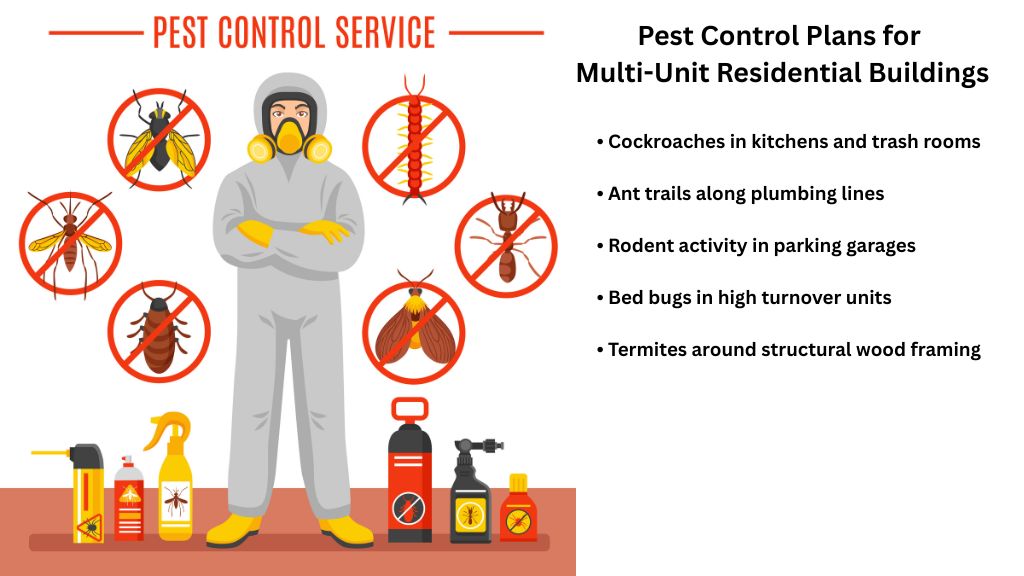
• Cockroaches in kitchens and trash rooms
• Ant trails along plumbing lines
• Rodent activity in parking garages
• Bed bugs in high turnover units
• Termites around structural wood framing
Each pest demands a specific control method. Roaches require sanitation and targeted baiting. Rodents need exclusion and trapping. Termites require professional structural treatment and monitoring.
How Pests Spread Between Units
Pests move through small openings around pipes and wiring. Wall voids act like highways inside buildings. Ceiling spaces above hallways provide hidden travel routes.
For example, a leak under one sink may attract ants. The colony expands through shared plumbing cavities. Soon, neighboring units notice activity. Quick reporting and coordinated treatment prevent widespread infestations.
Building-wide inspections reduce guesswork. Technicians examine basements, utility closets, and exterior perimeters. Early detection limits costly repairs and tenant complaints.
The Role of Preventive Inspections
Routine inspections form the backbone of a pest control plan. Scheduled visits identify conditions that attract pests before infestations grow. Inspectors look for moisture buildup, food debris, and structural gaps.
Next, property managers receive clear reports outlining risk areas. Maintenance teams can then repair cracks, seal entry points, and improve sanitation. Consistent monitoring creates predictable outcomes instead of emergency responses.
Preventive care also supports structural protection. Many managers schedule Termite treatment in Atherton as part of long-term property maintenance. Subterranean termites can damage support beams silently. Regular treatment prevents structural weakening and costly restoration projects.
Sanitation and Waste Management Protocols
Garbage areas often trigger pest outbreaks. Overflowing dumpsters attract rodents and insects quickly. Clear sanitation rules reduce these risks.
Effective protocols include:
• Daily trash removal schedules
• Sealed dumpster lids
• Regular pressure washing of waste areas
• Clear tenant guidelines for disposal
Education plays an important role. Tenants who understand pest risks cooperate more consistently. Management can provide simple reminders through newsletters or posted signage.
Exterior Perimeter Protection
Outdoor conditions strongly influence indoor pest activity. Landscaping that touches building walls creates hidden entry paths. Irrigation systems that overwater soil increase moisture levels.
Technicians inspect foundations, expansion joints, and siding. Sealing cracks and installing barrier blocks to access routes. Exterior bait stations provide additional rodent monitoring.
Communities in upscale neighborhoods also rely on Los Altos Hills pest control services to maintain discreet, effective treatments that protect property aesthetics while controlling pest pressure.
Integrated Pest Management for Apartments
Integrated pest management combines monitoring, sanitation, exclusion, and targeted treatments. This balanced approach limits chemical overuse while maintaining control.
Technicians begin with inspection and identification. Next, they select treatment methods suited to the pest type. For example, gel baits work well for roaches inside cabinets. Mechanical traps support rodent reduction in garages.
Communication remains essential. Property managers inform tenants before service visits. Residents prepare units by clearing sinks and cabinets. Cooperation increases treatment success rates.
Handling Tenant Complaints Professionally
Tenant reports often provide the first sign of infestation, so every complaint deserves prompt attention. Management teams should log the date, unit number, and specific concern in a central system. Quick acknowledgment shows residents that their health and comfort matter. Clear follow-up messages prevent confusion and reduce repeated calls to the office.
A calm explanation of inspection and treatment steps reassures residents during stressful situations. Giving realistic timelines helps set expectations and lowers frustration. Some issues, such as bed bugs, require temporary unit isolation and careful inspection of nearby apartments.
Coordinated scheduling avoids unnecessary disruption. Transparency reduces conflict, and professional pest control providers help managers explain findings, treatment plans, and preventive recommendations in simple language.
Budget Planning for Long-Term Protection
Annual pest control contracts create predictable operating expenses for property owners. Stable service agreements reduce the risk of sudden emergency costs that disrupt financial planning. Routine inspections included in these plans catch minor problems before they grow into expensive structural repairs.
Property managers should consider:
• Size of the building
• Number of units
• Age of construction
• Previous infestation history
Older buildings often require more frequent monitoring due to worn seals and aging materials. Properties with past infestations may need enhanced prevention strategies.
Long-term Los Altos Hills pest control planning protects structural components, preserves property value, and supports tenant health. Ignoring early warning signs often leads to higher repair expenses and possible vacancy losses later.
FAQs: Multi-Unit Pest Control Plans
Q1: How often should apartment buildings schedule pest inspections?
A1: Most multi-unit properties benefit from monthly or quarterly inspections. Frequency depends on building size, pest history, and tenant turnover rates. Regular visits prevent infestations from spreading.
Q2: Who is responsible for pest control in rental properties?
A2: Property owners typically handle structural pest management. Tenants must maintain cleanliness and report issues promptly. Lease agreements often outline shared responsibilities clearly.
Q3: Can termites spread between connected units?
A3: Yes, termites travel through shared framing and wall voids. Early structural inspections and professional termite treatments reduce colony expansion within connected buildings.
Q4: What is included in a multi-unit pest control plan?
A4: Plans usually include inspections, monitoring devices, sanitation recommendations, exclusion work, and targeted treatments. Detailed reporting supports compliance and tenant communication.
Q5: How can property managers reduce rodent activity in garages?
A5: Sealing entry gaps, installing door sweeps, and maintaining clean trash areas reduce rodent attraction. Exterior bait stations provide monitoring and control support.
Q6: Are eco-friendly pest control methods effective in apartments?
A6: Integrated pest management methods focus on targeted treatments and prevention. This approach reduces chemical exposure while maintaining effective pest suppression.
Q7: What signs indicate termite damage in multi-unit buildings?
A7: Mud tubes along foundations, hollow-sounding beams, and discarded wings near windows often signal termite presence. Professional inspection confirms active infestation.
Q8: Why is documentation important in apartment pest control?
A8: Service records protect property owners during inspections and legal disputes. Documentation shows consistent preventive efforts and supports regulatory compliance.
Protect Your Community Before Problems Spread
Habitat Pest Control partners with property managers to create structured, reliable pest management programs. We understand the unique needs of multi-unit residential buildings and provide detailed inspections, preventive treatments, and clear reporting.
Our team also delivers specialized services such as Los Altos Hills pest control to address local pest pressures with targeted solutions.
We coordinate discreet treatments that protect tenant comfort and structural integrity. Strong pest control planning keeps residents satisfied and properties operating smoothly. Reach out today to build a safer, pest-managed community.