
Summary
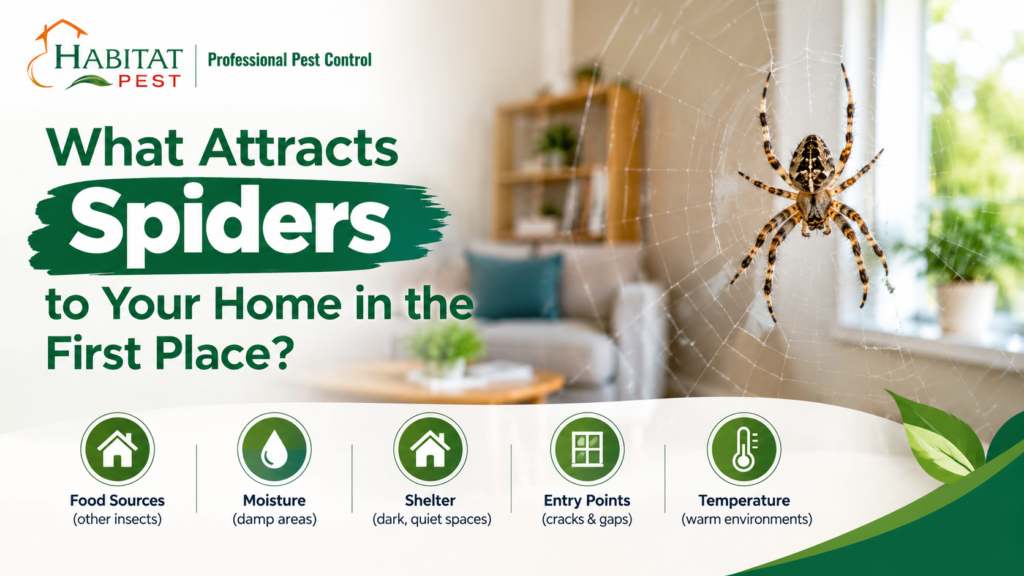
Spiders usually stay around a property because it offers food, shelter, moisture, or easy access. Outdoor lights can attract insects, while clutter, dense vegetation, cracks, and quiet corners give spiders places to hunt and hide. Reducing these conditions can make spider control more effective.
Spiders Follow Food
Spiders are predators, so they naturally go where prey is available. A property with flies, moths, ants, mosquitoes, and other small insects can become a reliable feeding area.
Some spiders build webs and wait for prey, while hunting spiders actively move around looking for food. (University of Minnesota Extension)
That means the spider you notice may not be the root of the problem. Insect activity nearby may be giving spiders a reason to stay.
Shelter Matters Too
Homes and yards provide many protected areas: garages, storage rooms, window corners, crawl spaces, eaves, landscaping, and piles of outdoor material.
Quiet, undisturbed spaces can be especially attractive because spiders can hide or build webs with less disturbance.
Outdoor Lighting Can Bring Spiders Closer
Exterior lights can create a simple food chain.
Flying insects often gather around artificial lights at night. Spiders may build webs or remain nearby because prey is concentrated there. Penn State Extension notes that spiders can gather around buildings with bright exterior lighting because the lights attract insects. (Penn State Extension)
You do not need to leave your home in the dark. Consider reducing unnecessary lighting or, where practical, positioning security lights farther from doors and windows.
Your Yard May Be Supporting the Activity
Tall grass, dense shrubs, leaf piles, firewood, bricks, boards, and other stored materials can create shelter for both spiders and insects.
Helpful steps include:
• Trim plants that touch exterior walls.
• Keep weeds and tall grass under control near the foundation.
• Move firewood and stored materials away from the structure when practical.
• Remove unnecessary leaf piles and outdoor debris.
• Check sheltered areas for webs and egg sacs.
University of Minnesota Extension recommends reducing debris, trimming vegetation, repairing screens, and sealing cracks as part of spider prevention. (University of Minnesota Extension)
Moisture Can Increase Pest Activity
Moisture does not attract every spider directly, but damp areas can support insects and create favorable conditions for some spider species.
Check crawl spaces, basements, leaking faucets, gutters, downspouts, irrigation, and poorly drained areas. Correcting leaks and excess moisture can make these areas less favorable to spiders and many of the pests they feed on.
Cracks and Gaps Provide Access
Spiders may wander indoors while searching for prey or shelter. Ground-level windows, doors, vents, foundation cracks, and gaps around pipes can all provide access.
Inspect the exterior for openings, especially near the ground. Repair damaged screens, improve door seals, and caulk appropriate cracks and gaps.
Clutter Creates Hiding Places
Spiders generally prefer areas that are not disturbed often.
Garages, sheds, basements, attics, storage rooms, and unused corners can provide dark hiding places. Boxes, bags, and stacked materials make those areas even more protected.
Reducing clutter removes hiding places and makes cleaning and inspection easier.
Why Windows and Corners Often Have More Webs
Web-building spiders look for locations where webs will not be disturbed and where prey regularly passes.
Window corners, ceiling edges, porches, garages, sheds, eaves, and foundation areas can provide those conditions. A web near a window does not automatically mean there is a large infestation. It may simply be a good hunting location.
Repeated webs in the same place, however, can indicate a steady food source or protected area.
The Bigger Problem May Be Other Insects
One of the most useful questions in spider control is: What are the spiders eating?
Check for flies around garbage, moths around stored products, ants near walls and windows, and flying insects around exterior lights. Removing individual spiders can help temporarily, but reducing prey can make the property less attractive over time.
Seasonal Changes Can Increase Spider Activity
Spider visibility changes with weather and insect activity.
Warm periods may increase insect populations and give spiders more feeding opportunities. Temperature changes can also push some spiders toward garages, sheds, windows, and other protected locations.
A seasonal increase does not always mean a new infestation. Existing outdoor activity may simply become easier to notice.
Why Web Removal Helps
Removing webs can quickly improve the appearance of a property and reduce established web sites.
Use a broom or vacuum on accessible webs and look for egg sacs in sheltered areas. University of Minnesota Extension includes web and egg-sac removal among recommended spider-management practices. (University of Minnesota Extension)
But if insects continue gathering in the same area, another spider may eventually take advantage of the location.
What Professional Spider Control Looks At
A useful inspection may evaluate:
• Spider type and activity pattern
• Web locations
• Other insect activity
• Exterior lighting
• Vegetation near the structure
• Cracks and entry points
• Moisture conditions
• Garages, sheds, crawl spaces, and other sheltered areas
This broader approach follows integrated pest-management principles: identify the conditions supporting the pest, reduce those conditions, monitor activity, and use targeted treatment when appropriate.
When Spider Activity Deserves More Attention
One spider does not automatically indicate an infestation. Spiders are common predators and can help reduce insect populations.
Professional help may be worth considering when sightings are frequent, webs are widespread, spiders repeatedly appear in multiple rooms, or activity quickly returns after cleaning. A sudden increase may also point to another insect problem around the property.
Common Questions About What Attracts Spiders
What attracts spiders to a house?
Food, shelter, and access are the main factors. Properties with many insects, clutter, vegetation, protected gaps, or favorable hiding places can support more spider activity.
Do outdoor lights attract spiders?
Lights primarily attract insects. Spiders may then gather nearby because the insects provide food.
Does a messy yard attract spiders?
Outdoor debris and stored materials can create shelter for spiders and insects. Keeping these materials away from the structure can reduce hiding areas.
Why are spiders common in garages?
Garages often have quiet corners, stored materials, gaps around doors, and insects that provide food.
Can moisture contribute to spider activity?
Yes. Damp conditions can support insects and can be favorable to some spiders.
Will removing spider webs get rid of spiders?
It can reduce visible activity, but webs may return if prey, shelter, and entry points remain.
How can I reduce spiders without spraying my entire house?
Start with exclusion and prevention: repair screens, seal gaps, reduce clutter, trim vegetation, remove debris, manage moisture, and reduce insect activity.
When should I consider professional spider control?
Consider it when activity is frequent, widespread, keeps returning, or is difficult to identify or manage.
Make Your Home Less Attractive to Spiders
Effective spider control starts by reducing the conditions that keep spiders around: prey, shelter, moisture, and easy access.
Habitat Pest Control provides spider control in San Jose and surrounding South Bay communities. We can inspect the property, identify contributing conditions, and recommend practical steps to reduce recurring activity.