
Summary:
Termites are sneaky destroyers. They work silently inside your walls, floors, and furniture, causing thousands of dollars in damage before you even notice. Mud tubes, hollow wood, and discarded wings are not random occurrences. They are serious warning signs. If you have already noticed these signs, getting professional termite treatment in Atherton or a San Jose spider exterminator on the job quickly can save your home from a slow, invisible collapse.
Your Home Could Be Getting Eaten Right Now
Termites destroy around 600,000 homes in the United States every single year, costing homeowners over $5 billion in damage. The scariest part? Most people have no idea it is happening until the damage is already done. These insects do not announce themselves. They hide inside walls, under floors, and deep in wooden beams, quietly chewing through the structure of your home.
Skipping regular termite treatment in Atherton can turn a small problem into a massive repair bill. The good news is that termites do leave clues behind. You just need to know what to look for.
What Are Mud Tubes and Why Should You Care
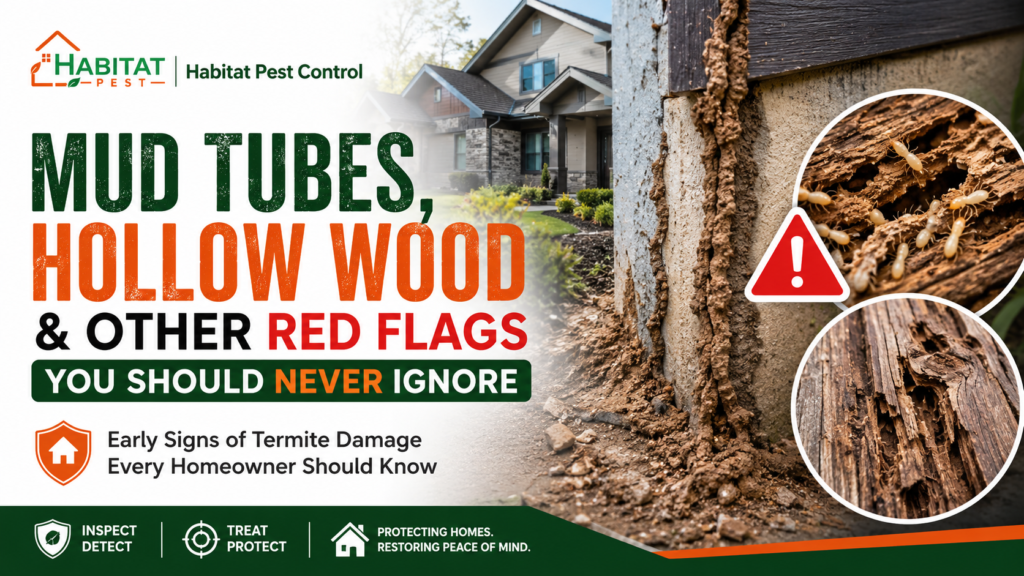
Mud tubes are one of the clearest signs of a termite problem. Subterranean termites, the most destructive type, build these small tunnels out of soil, wood particles, and their own saliva. They use these tubes to travel between their underground colony and your home without being exposed to the open air.
Next time you check your foundation, basement walls, or crawl space, look for pencil-thin brown tunnels running along the surface. If you spot them, do not ignore them. That is a live highway for termites leading straight into your home.
Hollow Wood: The Sound of a Serious Problem
Termites eat wood from the inside out. That means the outside can look completely normal while the inside is a hollowed-out mess. A simple way to test this is to knock on your wooden floors, walls, or furniture. If it sounds hollow or papery instead of solid, that is a red flag.
For example, a door frame that suddenly sounds empty when you tap it could mean termites have been feeding inside it for months. Hollow wood is not just cosmetic damage. It is structural damage that can make parts of your home unsafe.
Discarded Wings Near Windows and Doors
Termite swarmers, also called alates, are winged termites that leave the colony to start new ones. After they land, they shed their wings. Finding small, transparent, equal-sized wings near windowsills, door frames, or light sources is a major warning sign.
Swarmers are often confused with flying ants, so look closely. Termite wings are all the same size, while ant wings are unequal in length. Finding these wings inside your home means a new colony may already be forming nearby.
Paint That Bubbles, Warps, or Looks Water-Damaged
Bubbling or peeling paint is easy to blame on moisture, but termites can cause the same effect. As they tunnel through wood behind your walls, they create small pockets of moisture. This moisture pushes against the paint and causes it to blister or warp.
In addition, wallpaper that starts to look rippled or uneven for no obvious reason can also point to termite activity. Many homeowners spend money fixing the paint without ever checking what is behind it.
Tight Doors and Stiff Windows Out of Nowhere
If your doors and windows suddenly feel harder to open or close, termites might be the reason. As they consume wood and produce moisture, the frames expand and shift. This makes doors and windows warp slightly out of shape.
Seasonal changes can cause similar issues, but if the problem appears suddenly and gets worse quickly, it is worth checking for pest activity. A stiff door today could mean a compromised structure tomorrow.
Frass: The Telltale Droppings
Drywood termites leave behind tiny droppings called frass. These pellets are wood-colored and look almost like sawdust or coffee grounds. You might find small piles of them near baseboards, windowsills, or beneath furniture.
Unlike subterranean termites that use their droppings to build mud tubes, drywood termites push frass out of tiny holes in the wood. If you see these small piles and cannot explain them, do not sweep them away and forget about them. Get the area inspected as soon as possible.
Spider Activity: A Sign Your Pest Problem Runs Deeper
Termites are not the only silent threat in your home. Spiders often move in where other insects are present because insects are their food source. So if you are suddenly seeing more spiders in corners, basements, or garages, it could mean a bigger pest problem is already underway.
A San Jose spider exterminator would tell you that a spike in spider sightings often points to a larger infestation of other pests nearby. Spiders are predators, and they follow their prey. Where there are many spiders, there are usually many other bugs.
Tight Crawl Spaces and Damp Areas Are High-Risk Zones
Termites love moisture. Crawl spaces, basements, and areas near leaky pipes are prime spots for termite colonies to thrive. If your home has any areas that stay damp, check them regularly. Look for mud tubes, soft wood, and any signs of tunneling.
In addition, stacked firewood or mulch placed too close to your home’s foundation can also attract termites quickly. Keeping these areas dry and clear is one of the simplest ways to reduce your risk.
Answers to Your Termite and Pest Questions: What Homeowners Ask Most
Q1. How do I know if I have termites or just water damage?
A1. Water damage usually comes with visible leaks, stains, or mold. Termite damage often looks similar, but it appears without any water source nearby. Hollow-sounding wood, mud tubes, and frass alongside the damage are signs that point toward termites rather than moisture alone.
Q2. Can termites damage a home in just one season?
A2. Yes. A large colony can cause significant structural damage in as little as three to five years, and noticeable damage can appear within a single year under the right conditions.
Q3. Are mud tubes always a sign of active termites?
A3. Not always. Old, dry mud tubes may mean the colony has moved on. Crush a small section and check back in a few days. If it is repaired, the termites are still active.
Q4. Do termites only attack older homes?
A4. No. New homes are just as vulnerable. Termites attack any wood structure regardless of age, and construction debris left under a new home can attract them quickly.
Q5. What is termite treatment in Atherton typically like?
A5. It usually involves a professional inspection, identification of the termite species, and a treatment plan that may include liquid termiticides, bait stations, or fumigation, depending on the severity and type of infestation.
Q6. Is it safe to stay home during termite treatment?
A6. It depends on the treatment type. Spot treatments and bait systems are generally safe for occupants. Fumigation requires you to leave the home for a few days. Your pest control provider will give you specific safety instructions.
Q7. Can I handle a termite problem on my own?
A7. Store-bought sprays can kill a few termites on contact, but will not eliminate a colony. Termites build deep, hidden colonies that require professional-grade treatments to fully address.
Q8. How often should I get a pest inspection?
A8. Once a year is a good baseline for most homes. Homes in high-risk areas, near wooded land, or with previous infestations may benefit from inspections every six months.
Do Not Wait Until the Damage Is Already Done
Termites and spiders are not problems that fix themselves. The longer you wait, the worse and more expensive the situation gets. If you spotted any of the red flags in this post, your next step is clear. Get a professional inspection done before another season passes.
Habitat Pest Control understands how stressful a pest situation can feel for homeowners. Our team brings hands-on knowledge and practical solutions to problems like termite treatment in Atherton and the surrounding areas.
For spider concerns, wood damage, or a full home inspection, Habitat Pest Control is the local name homeowners trust to protect their biggest investment.