
Summary
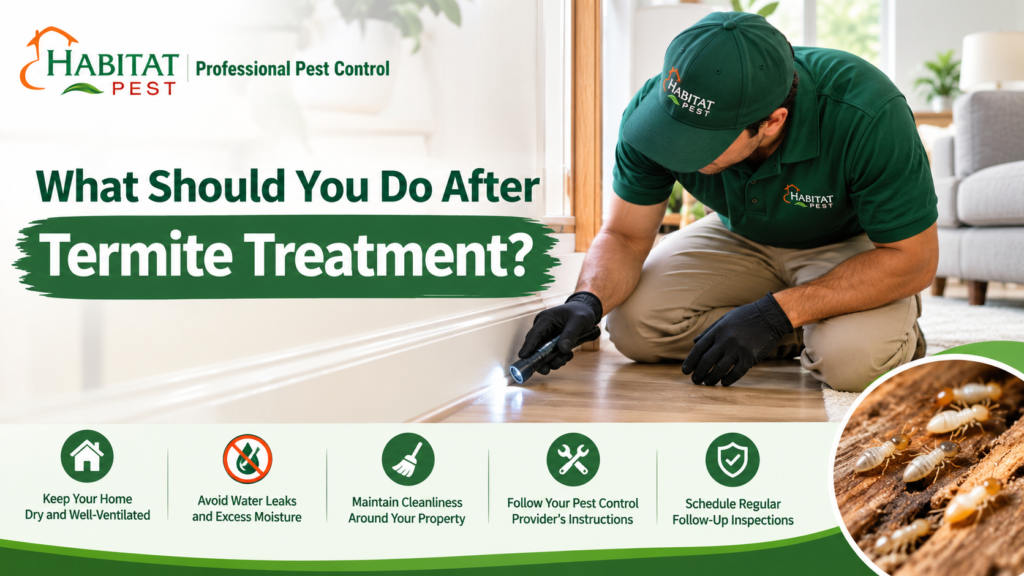
Termite treatment is an important step, but long-term protection also depends on what happens afterward. Homeowners should follow the applicator’s instructions, avoid disturbing treated areas, correct moisture problems, keep wood debris away from the structure, and watch for renewed activity.
Treatment Is One Part of Termite Protection
A termite treatment addresses a specific infestation or risk, but conditions around the property still matter afterward.
Moisture, wood debris, soil changes, landscaping, construction, and access points can affect future termite risk. The EPA recommends keeping foundations dry, fixing leaks, reducing openings around utilities, and keeping firewood and wood debris away from the home. (U.S. EPA)
Think of treatment as part of an ongoing protection plan rather than a permanent guarantee that termites can never return.
Follow the Instructions Given After Treatment
Different termite treatments have different requirements. Liquid soil treatments, localized wood treatments, bait systems, and fumigation do not have the same reentry or follow-up instructions.
Your pest professional should explain what was treated, what should not be disturbed, and when normal use can resume. Always follow the product label and the licensed applicator’s instructions for reentry, cleaning, ventilation, and contact with treated areas.
Do Not Disturb Treated Soil
This is especially important after a soil-applied treatment for subterranean termites.
Digging, grading, trenching, installing irrigation, planting, or construction near treated areas may disturb the treated soil. If you plan work near the foundation, first determine where the termite treatment was performed.
A landscaping project that seems unrelated to pest control can affect termite protection if it removes or redistributes treated soil.
Fix Moisture Problems
Excess moisture can make parts of a property more favorable to termites and can contribute to wood deterioration.
Check for:
• Standing water near the foundation
• Leaking outdoor faucets
• Clogged or damaged gutters
• Downspouts draining too close to the house
• Wet crawl spaces
• Plumbing leaks
• Poor drainage or grading
Correcting these conditions supports the work already performed and makes future inspection easier.
Keep Wood and Debris Away From the Structure
Firewood, wood scraps, cardboard, fallen branches, and other cellulose materials can create favorable conditions near the home.
Avoid stacking firewood directly against exterior walls. Remove unnecessary wood debris and keep stored materials away from the foundation when practical.
The EPA recommends keeping firewood and wood debris away from the structure as part of termite prevention. (U.S. EPA)
Be Careful With New Landscaping and Construction
New soil, mulch, irrigation, garden beds, patios, fences, and other projects can change drainage or disturb previously treated areas.
Large plants and dense landscaping can also block access to the foundation, making future inspections more difficult.
Before major work near a treated area, ask the termite company whether the project could affect the treatment or warranty.
Monitor Previously Active Areas
You do not need to inspect the house constantly, but occasional visual checks can be useful.
Watch previously affected areas for fresh mud tubes, new swarmers or discarded wings, or new signs of wood damage. If something looks suspicious, take a photo and contact the company that performed the treatment.
Do not assume every mark or damaged board is active termite evidence. A professional can help determine whether the condition is new, old, or unrelated.
What If You See Termites After Treatment?
Seeing termites after treatment does not automatically mean the treatment failed.
The meaning depends on the termite species, treatment method, location, and how much time has passed. Bait systems, localized treatments, soil treatments, and fumigation work in different ways.
Do not immediately apply another pesticide yourself. Contact the treating company so it can evaluate whether the activity is residual, new, related to a disturbed treatment area, or coming from another source.
Keep Your Inspection and Treatment Records
Save your termite paperwork.
Useful records include:
• Inspection reports
• Treatment date and areas treated
• Products or treatment methods used
• Warranty information
• Follow-up instructions
• Photos from the original inspection, if available
These records can be helpful if new activity appears, if another professional evaluates the property, or if the home is sold later.
Do Not Assume You Need Another Full Treatment
More pesticide does not automatically mean more protection.
If new activity appears, the first step should be to determine what changed and where the termites are active. Depending on the situation, the appropriate response might be monitoring, a localized treatment, repair, correction of moisture or access conditions, or retreatment of a specific area.
The treatment recommendation should be based on current evidence rather than a routine assumption that the entire property must be treated again.
Continue Basic Home Maintenance
Routine maintenance supports termite prevention.
Keep gutters clear, repair leaks, maintain drainage, remove dead wood and debris, and keep important foundation areas accessible for inspection. These steps help reduce moisture and other conditions that can contribute to termite activity.
Give Bait Systems Time to Work
Termite bait systems work differently from liquid barriers or localized treatments.
Baits use slow-acting materials and depend on termites feeding on the bait and sharing it within the colony. Results may not be immediately visible.
If a baiting system is installed, follow the inspection and monitoring schedule provided by the pest professional. Do not move or remove stations unless instructed to do so.
When Should You Contact the Pest Professional Again?
Contact the company if you notice:
• Fresh termite tubes
• New termite swarms
• New signs of wood damage
• Activity near a previously treated area
• A damaged or disturbed treatment area
• Landscaping or construction that may have affected treated soil
Early communication makes it easier to determine whether follow-up work is needed.
Common Questions After Termite Treatment
Can I stay in my house after termite treatment?
It depends on the treatment method and product. Follow the reentry instructions from the licensed applicator and the product label.
Can I do landscaping after termite treatment?
Yes, but digging or construction near treated soil may affect the treatment. Check with the pest professional before disturbing treated areas.
Should I move firewood away from my house?
Yes. Keeping firewood and wood debris away from the structure reduces favorable conditions and keeps the foundation easier to inspect.
What should I do if I see termites after treatment?
Contact the company that performed the treatment. Avoid applying additional pesticides before the situation is evaluated.
Can termites come back after treatment?
Yes. No treatment can guarantee that termites will never reach a structure again. Future activity can occur if new access or favorable conditions develop.
How can I protect my home after treatment?
Manage moisture, maintain drainage, keep wood debris away from the structure, avoid disturbing treated soil, and monitor for new signs of activity.
Do I need termite treatment every year?
Not automatically. The need for additional treatment depends on the treatment method, current evidence, property conditions, and warranty or monitoring plan.
Should I keep termite treatment records?
Yes. Keep inspection reports, treatment information, warranty details, and follow-up instructions together.
Protect the Work After Treatment
Good follow-up helps protect the investment you made in termite treatment. Maintaining drainage, correcting leaks, protecting treated areas, and watching for new signs can all support long-term termite management.
Habitat Pest Control provides termite treatment in San Jose and surrounding South Bay communities. We can inspect the property, explain the treatment approach, and provide practical guidance on what to watch after the work is completed.