
Summary
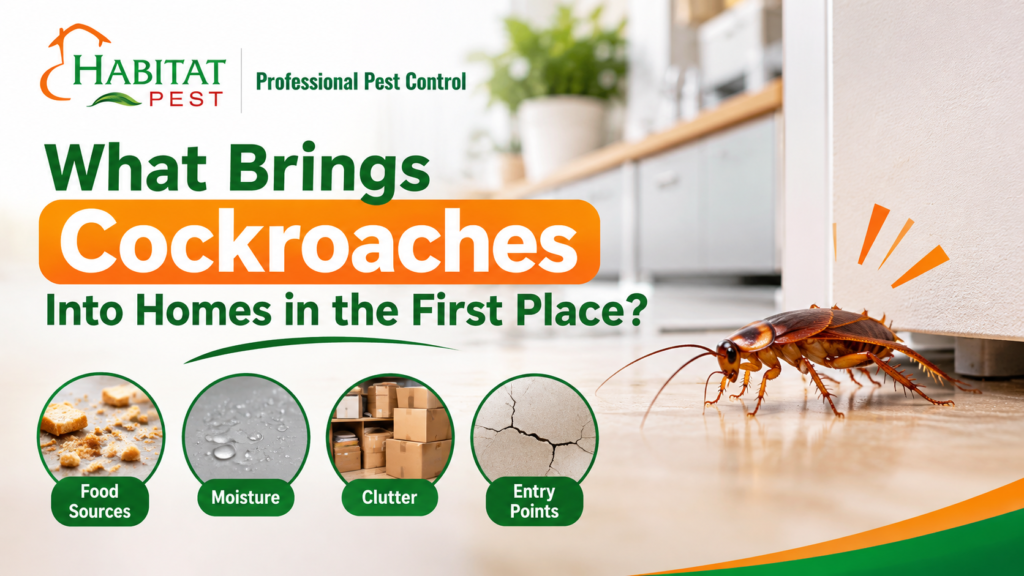
Cockroaches get inside through small gaps, wander in from hiding spots outdoors, ride in on boxes, or come up through drains. Once inside, food and moisture help them stay. Knowing which route they’re using is the first step in cockroach control, and it often leads outside the kitchen.
A 2018 Santa Clara County report describes a Cupertino resident’s complaint about cockroaches indoors. When the property was checked, Turkestan cockroaches were found in a water meter box nearby. The report doesn’t confirm that the meter box was where the indoor cockroaches came from, but it shows how close an outdoor population can be to a home.
Cockroaches need a way in and a reason to stay, and most of them get inside in one of four ways.
1. Through Gaps Where Two Materials Meet
Entry points usually sit at seams: a pipe coming through a cabinet wall, a door that doesn’t quite meet its frame, a gap along the baseboard, worn weather stripping. These are easy to overlook because they look like normal parts of the house.
Door sweeps, intact weather stripping, and caulked cracks all help, and UC IPM lists exclusion as an important part of long-term cockroach management.
2. From Outdoor Hiding Spots
Turkestan cockroaches are an outdoor species. UC IPM associates them with residential landscapes, water meter boxes, drainage areas, and debris piles, and notes they may wander indoors when outdoor populations are high.
That makes irrigated beds, leaf litter, woodpiles, and utility boxes near the house worth a look. Thinning dense plants by the walls, clearing debris, and cutting back on overwatering make the area right around the home less inviting.
3. Inside Boxes and Secondhand Items
Not every cockroach crawls in. Boxes, used appliances, furniture, and items from a storage unit or garage can all carry them. UC IPM recommends inspecting packages and items before bringing them inside, particularly cardboard, appliances, and furniture. A quick look before unpacking in the kitchen can save a lot of trouble.
4. Up Through Drains
Larger species such as the American cockroach can travel through sewer and drain lines. Floor drains in garages and laundry rooms, and sinks or tubs that rarely get used, are the usual suspects. Keep drain covers in place and run water through unused drains now and then so the traps don’t dry out.
What Makes Them Stay
Getting in is half the story. Food and water keep them around.
Small amounts of food go a long way. Grease around the stove, crumbs under the toaster, open cereal boxes, pet food left out overnight, and uncovered trash can all keep cockroaches fed. Water may matter even more. A dripping faucet, a damp cabinet under the sink, condensation behind the fridge, or a leaking water heater can give them everything they need. UC IPM recommends fixing plumbing and irrigation leaks and cutting back unnecessary moisture around buildings.
How to Tell How Big the Problem Is
Most cockroaches are nocturnal, so one sighting after dark doesn’t necessarily mean there’s a large population. Repeated sightings in the same area are more telling, especially with other signs nearby:
• Droppings that look like black pepper or coffee grounds (from smaller species) or small ridged pellets (from larger ones)
• Shed skins
• Egg cases tucked into cracks or behind appliances
Sticky traps help show where activity is concentrated. UC IPM suggests placing them along wall edges, under appliances, inside cabinets, and near suspected entry points.
If sightings in your Cupertino home keep coming back and the source isn’t obvious, Habitat Pest Control can inspect the areas connected to the activity and recommend a pest control approach based on what we find.
Questions Homeowners Ask About Cockroaches
Q1. Will cleaning alone get rid of cockroaches?
A1. Cleaning removes food, but it won’t close entry gaps, dry up leaks, or deal with cockroaches living outside.
Q2. Are cockroaches a health concern?
A2. They can contaminate food and kitchen surfaces, and their droppings and shed skins can trigger allergies and asthma in some people.
Q3. Can one type of cockroach be mistaken for another?
A3. Yes. Outdoor species can look a lot like indoor ones, and getting the identification right changes where to look and which control methods make sense.
Q4. Do cockroaches fly?
A4. A few can. Some species, including male Turkestan cockroaches, have working wings, but most cockroaches around homes run rather than fly.
Q5. Do bug bombs work on cockroaches?
A5. Generally not well. UC IPM advises against foggers for cockroaches because the spray doesn’t reach the cracks and voids where they hide, and it leaves residue on exposed surfaces.
Q6. Do cockroach baits work?
A6. Baits are one of the main tools UC IPM recommends for indoor cockroaches. They work best placed in cracks and near activity, with competing food sources cleaned up.
Q7. Do cockroaches get worse after a change in the weather?
A7. They can. Shifts in temperature, rain, and outdoor moisture can make outdoor cockroaches move around more. A sudden increase after a weather change doesn’t necessarily mean the problem started then.