
Summary
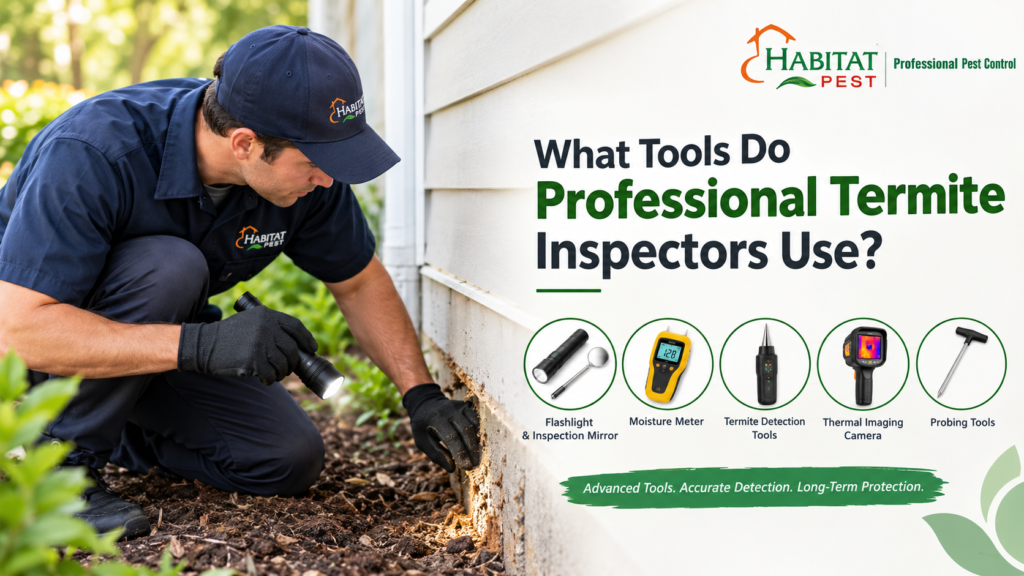
A termite inspection involves more than looking for visible insects. Depending on the property and the inspector’s equipment, tools may include flashlights, probing tools, moisture meters, ladders, cameras, and other devices that help evaluate accessible areas and suspicious conditions. The tools support the inspection, but they do not replace the inspector’s training and judgment.
A Termite Inspection Starts With Careful Observation
Termites can remain hidden behind finishes, beneath floors, inside crawl spaces, or around foundations without obvious signs.
A professional inspection therefore starts with a careful visual examination of accessible areas. The inspector looks for evidence such as mud tubes, damaged wood, swarmers, discarded wings, termite droppings, moisture conditions, and construction features that may allow termite access.
Tools can help investigate suspicious areas, but a reading or image is only useful when interpreted in context.
A Strong Flashlight Is Essential
A flashlight is one of the simplest and most useful inspection tools.
Crawl spaces, attics, garages, foundation areas, and wall edges can be dark even during the day. Good lighting helps an inspector examine wood surfaces, plumbing penetrations, joints, cracks, mud tubes, droppings, and other small clues.
Probing Tools Help Evaluate Wood
An inspector may use a small probe, screwdriver, or similar hand tool to check suspicious accessible wood.
Sound wood generally feels firm. Wood affected by termites, decay, or moisture damage may feel soft, hollow, or weakened.
Probing can be useful around exposed framing, sill plates, window or door components, crawl spaces, and other accessible wood. The result does not identify the cause by itself; it tells the inspector that the area deserves closer evaluation.
Moisture Meters Can Identify Damp Conditions
Moisture is relevant because damp conditions can contribute to wood deterioration and can make some areas more favorable to termite activity.
A moisture meter measures moisture in or around building materials. It does not detect termites.
An inspector may use one around staining, plumbing concerns, damaged wood, or other areas that appear damp. Elevated moisture can prompt a closer inspection and may also point to a building-maintenance issue that should be corrected.
Inspection Cameras Can Help in Limited Spaces
A borescope or small inspection camera can sometimes provide a view into a narrow or enclosed area when an appropriate access point already exists or when its use is otherwise appropriate.
These cameras can be helpful in certain cavities or restricted spaces, but they cannot see through solid walls and they do not replace a visual inspection.
Thermal Imaging May Provide Additional Clues
Some inspectors use thermal imaging cameras to identify unusual surface-temperature patterns.
Thermal imaging does not directly detect termites. Temperature differences may be related to moisture, insulation, air movement, or other conditions.
When used, thermal imaging should be treated as a screening tool that may help identify areas deserving further investigation, not as proof of a termite infestation.
Other Detection Devices
Specialized electronic detection equipment may sometimes be used to help investigate activity inside wood or enclosed areas.
The usefulness of these devices depends on the equipment, building conditions, accessibility, and the operator’s experience. No single device provides a simple guaranteed yes-or-no answer for an entire structure.
Visual Evidence Still Matters Most
Technology can support an inspection, but visual examination remains central.
Inspectors may look for:
• Mud tubes along foundations or walls
• Damaged or hollow-sounding wood
• Small openings or galleries in wood
• Discarded wings
• Termite droppings
• Swarmers
• Moisture problems
• Wood-to-soil contact
• Construction conditions that may provide termite access
The signs vary by termite species and by how the property is built.
Crawl Spaces Often Need Extra Attention
Crawl spaces can contain exposed framing, plumbing, soil, moisture, insulation, and foundation transitions, making them important inspection areas when safely accessible.
A flashlight and probing tool are common. Depending on the inspector and the conditions, a moisture meter or camera may also be useful.
The inspector may pay particular attention to sill plates, piers, plumbing areas, wood-to-soil contact, and locations where termite tubes could be concealed or overlooked.
Attics Can Reveal Different Clues
Attics present a different inspection environment.
Inspectors may examine accessible roof framing, wooden supports, eaves, ventilation areas, moisture staining, and other wood components for evidence of drywood termites, wood-destroying organisms, or past damage.
Not every damaged board is termite damage. Water intrusion, fungal decay, age, and construction defects can create similar-looking conditions. Context matters.
Why Moisture Findings Matter
An inspector may find elevated moisture without finding active termites.
That is still useful information. Moisture may come from plumbing leaks, failed seals, drainage issues, condensation, or other building problems. Prolonged dampness can contribute to wood deterioration and may create more favorable pest conditions.
Correcting the source can help protect the structure even when no active termite infestation is found.
Tools Cannot Replace Experience
A moisture meter provides a reading. A thermal camera shows a temperature pattern. A camera shows what is visible through its lens.
None of those tools independently explains the condition of the house.
The inspector has to connect the evidence: termite behavior, wood condition, construction, moisture, access points, visible signs, and the limitations of the inspection.
What Happens After the Inspection?
After the inspection, the homeowner should receive a clear explanation of the findings and recommended next steps.
Depending on what is found, the recommendation may involve treatment, repair, moisture correction, monitoring, preventive work, or no immediate termite treatment at all.
If treatment is recommended, the company should explain the method, the areas to be treated, preparation requirements, warranty terms, and why that approach fits the evidence found.
Common Questions About Termite Inspection Tools
What is the most important tool during a termite inspection?
There is no single most important device. Good lighting, access, visual inspection, and the inspector’s experience are fundamental. Other tools may support the evaluation when appropriate.
Can a moisture meter detect termites?
No. It measures moisture. Elevated readings can identify an area that deserves closer inspection.
Can thermal imaging detect termites inside walls?
Not directly. Thermal imaging shows surface-temperature differences, which may indicate moisture or other conditions that warrant further investigation.
What does an inspector use to check damaged wood?
A probing tool can help evaluate accessible wood. Visual evidence and moisture conditions may also help the inspector determine what caused the damage.
Can a camera find termites inside walls?
A borescope can provide a limited view into certain enclosed spaces when suitable access exists. It cannot inspect every wall or guarantee that hidden termites will be found.
Do termite inspectors check crawl spaces?
When safe and accessible, crawl spaces are often important inspection areas because they contain exposed wood, soil, moisture, and potential termite access points.
Can an inspection find old termite damage?
Often, yes. An inspector may identify evidence of previous damage, although determining exactly when it occurred may not be possible from appearance alone.
Can inspection tools guarantee a home has no termites?
No. Termites can remain hidden, and some areas may be inaccessible. A professional inspection provides an assessment based on the accessible evidence available at the time.
The Right Tools Help Build the Bigger Picture
A termite inspection is not simply about finding a live insect. It is about evaluating the structure for evidence of activity, damage, moisture, and conditions that may increase risk.
Habitat Pest Control provides termite inspections in San Jose and surrounding South Bay communities. We examine accessible areas, explain what the findings mean, and recommend treatment only when the evidence supports it.