
Summary
Rats can move through sewer systems and sometimes enter buildings through toilets or damaged drains, but a rat near a bathroom does not prove a sewer problem. Learn which signs deserve attention, what you can inspect safely, and when to call a plumber, sewer authority, or pest professional. San Jose homeowners should identify the likely route before choosing a fix.
Before Blaming the Sewer, Check the Evidence
A rat spotted beside a bathroom drain raises an obvious question: did it come through the plumbing, or did it enter through a gap nearby? Both routes are possible, and the difference matters when deciding what to repair.
Rats can swim through sewers and enter buildings through toilets or broken drains, according to the University of California’s rat management guidance. Yet a sighting near a sink, toilet, or utility pipe does not prove the sewer is responsible. A careful investigation helps San Jose homeowners avoid paying for the wrong repair or relying on pest treatment when damaged plumbing needs attention.
How Could a Rat Get Through a Sewer or Drain?
The path depends on the condition and layout of the plumbing system. Three situations deserve separate attention because each calls for a different response.
· A damaged underground sewer line
A sewer lateral carries wastewater from a building to the public sewer main. Cracked pipes, failed joints, and other defects can create openings between the pipe and surrounding soil.
Rats may exploit accessible defects, but a damaged underground lateral does not automatically provide a route into the house. Indoor entry depends on the connections, plumbing layout, and any additional openings the animal can reach.
A qualified plumber can investigate suspected pipe damage. Finding a rat indoors, however, is not sufficient evidence that the lateral needs replacement.
· A toilet or floor drain
Rats are capable swimmers, and certain plumbing arrangements may allow them to reach a toilet or enter through damaged drainage components.
Plumbing traps hold water to prevent sewer gases from entering occupied spaces. They are not designed as rodent-proof barriers, so their presence alone cannot confirm or rule out a possible entry route.
A suspected plumbing entry requires professional assessment of the fixture, drainage connections, and pipe condition. A rat appearing near a floor drain does not necessarily mean it traveled through that drain.
· A gap around a pipe
Sometimes the drain itself is intact, but the space around the pipe is poorly sealed. An opening where plumbing passes through a foundation, wall, or floor may allow a rat that has already reached the building exterior to get inside.
This distinction can prevent unnecessary work. Replacing an intact sewer pipe will not close a separate opening in the wall, and sealing that wall opening will not repair a damaged drain line.
Which Clues Deserve a Closer Look?
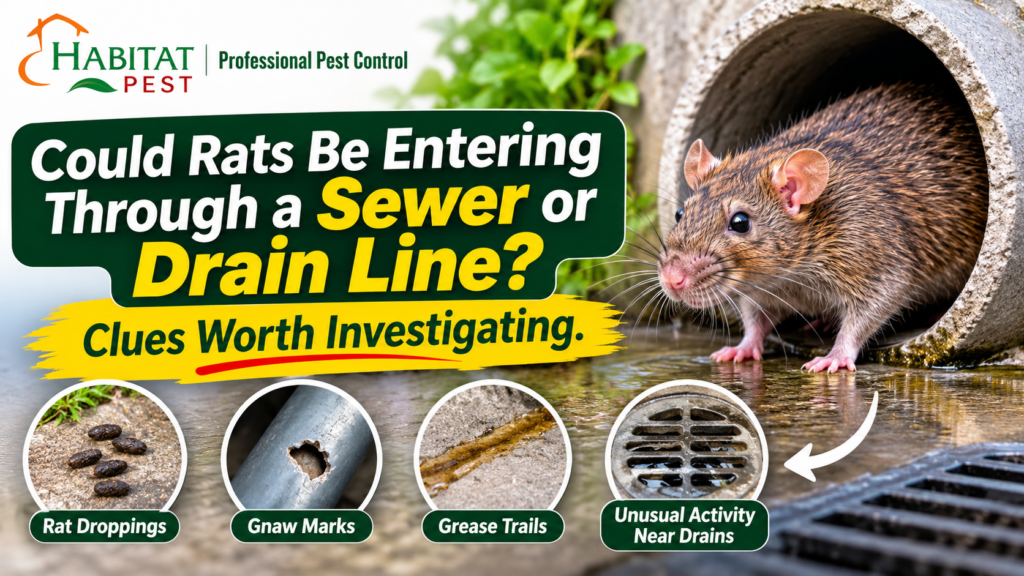
A single sign rarely tells the whole story. Look for details that connect the rat activity to a particular plumbing fixture or part of the property.
· A rat emerging from a toilet: This is a specific reason to seek plumbing advice. Keep the lid closed if safe to do so, keep people and pets away, and contact a qualified plumber for guidance.
· Repeated sightings beside one drain: Record the location and timing. Recurring activity around the same fixture deserves inspection, although the route could still be outside the drain.
· New drainage problems: Repeated backups, unusual gurgling, or sewage odors suggest a plumbing concern. These symptoms have several possible causes and do not independently prove rat activity.
· Evidence near an exterior sewer route: Burrows, disturbed soil, or recurring rat sightings near accessible pipe connections may justify a closer look. Avoid digging near buried utilities.
Droppings or gnaw marks in a bathroom cabinet can help confirm rodent activity, but they do not identify how the rat entered. Record where you found the evidence instead of assuming every sign points to the sewer.
What Can San Jose Homeowners Inspect Safely?
Begin with visible areas rather than opening pipes. Look beneath sinks, around accessible plumbing, and where pipes pass through floors or walls. Damaged seals, structural gaps, droppings, and gnaw marks may offer useful clues.
Outside, inspect accessible foundation areas and visible wall penetrations. Leave underground pipe inspections to qualified professionals. Never remove sewer cleanout covers, open manholes, or enter confined spaces to search for rats.
Photograph suspicious openings and record the locations of any sightings. These observations can help distinguish likely building access points from concerns requiring plumbing investigation.
Other structural openings may be responsible even when rodent activity occurs near a drain. Habitat Pest Control’s rodent and rat control information explains the importance of removal and exclusion, while its guide on how to prevent rats from returning offers additional insight into possible access routes around the home.
Who Should You Call First?
The strongest evidence should determine which professional examines the problem.
Contact a plumber when a rat appears to emerge from a toilet or drain, a sewer line may be damaged, or recurring drainage symptoms suggest a plumbing defect. A sewer camera inspection may reveal cracks, blockages, or other pipe problems, although it may not establish the rat’s exact route into the building.
Contact a pest professional when you find droppings, gnaw marks, or suspected entry gaps around the building. A rodent specialist can investigate accessible routes, assess evidence of activity, and recommend suitable control and exclusion measures.
Some situations require both professions, particularly when a plumbing defect and rodent activity occur together.
Who Is Responsible for Sewer Lines in San Jose?
The City of San José’s sanitary sewer guidance explains an important distinction between public sewer mains and private sewer laterals.
The City maintains public sanitary sewer mains, while property owners are responsible for maintaining their entire private sewer lateral. As a courtesy, the City maintains the lower portion of certain laterals when an approved property-line wye cleanout is installed in the required location. This arrangement does not transfer ownership of the lateral to the City.
Confirm the applicable responsibility and service arrangements before authorizing underground repairs.
Storm drains are a separate system. According to the City’s sewer and storm drain information, sanitary sewers carry household wastewater for treatment, while storm drains transport rainwater and irrigation runoff toward local waterways.
Understanding which system is involved helps homeowners identify the appropriate authority when public infrastructure may be affected.
Avoid Quick Fixes That Could Make Matters Worse
Never pour pesticides, bleach, fuel, or chemical mixtures into a drain to kill or repel rats. These methods do not establish the source and can create additional hazards.
Do not seal a suspected opening blindly if a rat could remain inside a wall or building cavity. A lasting repair should close the confirmed access point without blocking necessary plumbing access or trapping an animal indoors.
Good rat control combines identification, removal, and exclusion. The UC Integrated Pest Management rat guide explains why reducing access to buildings is an important part of managing rat activity. Plumbing repairs and rodent exclusion address different problems, so both might be necessary in the same home.
How Habitat Pest Control Can Help
Habitat Pest Control provides residential pest control services across San Jose and nearby Bay Area communities, including rodent inspections, removal, and exclusion. Its approach focuses on identifying signs of activity, investigating possible entry points, and recommending appropriate control measures.
Rodent activity near plumbing may involve gaps around pipes, damaged barriers, or other structural openings. A pest-control professional can assess these accessible areas and help address rodents already inside. Suspected sewer damage, however, requires a qualified plumber because pest-control services do not repair underground drainage pipes.
Identifying which problem belongs to which professional can help homeowners avoid unnecessary repairs and address the actual source of the activity.
Key Questions About Rats and Plumbing
Q1. Can rats really enter a house through a toilet?
A1. Yes. UC Integrated Pest Management identifies toilets and broken drains among possible rat entry routes. A rat found in a bathroom does not automatically mean it came through the toilet.
Q2. Does a slow drain mean rats are inside the pipe?
A2. No. Slow drainage has many possible causes, including blockages and pipe defects. Have a plumber investigate recurring drainage problems rather than assuming rats are responsible.
Q3. Can a camera inspection find a broken sewer pipe?
A3. A sewer camera can help a qualified plumber inspect the pipe’s interior for defects or blockages. The results need to be interpreted alongside the property’s symptoms and plumbing layout.
Q4. Should I open a drain cleanout to check for rats?
A4. No. Opening plumbing access points yourself can expose you to wastewater, gases, or other hazards. Leave the inspection to a qualified professional.
Q5. Are storm drains and sanitary sewers the same?
A5. No. Sanitary sewers carry household wastewater, while storm drains carry rainwater and runoff. Knowing which system is involved helps narrow down the appropriate contact.
Q6. Who pays to repair a sewer lateral in San Jose?
A6. Property owners are generally responsible for their sewer lateral, subject to the City’s stated arrangements for certain lower-lateral sections. Check the City’s current guidance before arranging repairs.
Q7. Will sealing an opening stop all rat activity?
A7. Sealing a confirmed entry point helps prevent access through that opening, but it may not remove rats already indoors or close other routes. An inspection should account for both possibilities.
Q8. Should I call a plumber or a pest-control professional first?
A8. Contact a plumber when the evidence suggests a problem inside a toilet, drain, or sewer line. A pest control specialist can investigate rodent activity and possible entry points around the building. Some situations may require both professionals.
Let the Evidence Decide the Next Call
A sewer repair and a rodent exclusion visit solve different problems, and choosing the wrong one can leave the original issue untouched. A photograph of a damaged wall opening, a record of repeated sightings, or a plumber’s inspection findings can make the next decision much clearer.
Habitat Pest Control helps homeowners investigate accessible rodent entry points and activity around their properties. When the evidence suggests a building access problem, an exclusion assessment can identify what needs attention. Suspected defects inside the drainage system belong with a plumbing professional, allowing each issue to be addressed without unnecessary guesswork.