
Summary-
Summer arrives, and so do the ants. You clean, you wipe, and yet a line of tiny insects still marches across your kitchen floor. Here’s the thing: ants are not coming in because your home is dirty. Homeowners looking for ant removal in Saratoga face this every summer, and the answer is almost always the same: your kitchen is giving ants every reason to walk right in.
Why Summer Is Peak Season for Ant Activity
Ants don’t hibernate, but they do slow down in winter. When temperatures rise in summer, ant colonies become extremely active. Queens start laying more eggs, worker ants go out looking for food, and the whole colony shifts into high gear. Your kitchen, full of crumbs, moisture, and sweet smells, becomes a top target. The warmth of summer speeds up their metabolism, which means they need more food, and they need it fast.
What’s Really Drawing Them In
Most people think ants come in because of a messy kitchen. That’s not always true. Even a spotless kitchen can attract ants. Ants are drawn to three main things: food, water, and shelter, and your kitchen has all three.
Even a tiny drop of juice on the counter, a crumb under the fridge, or a slightly damp sponge near the sink is enough to bring them in. This is exactly why ant removal in Saratoga is one of the most common calls pest control teams get every single summer. Sugar is a big one.
Ants love anything sweet, like fruit, syrup, honey, or even toothpaste. In addition, they’re also drawn to proteins and fats, which means pet food, cooking grease, and meat scraps are just as appealing. Next comes water. Leaky pipes, condensation under the sink, or even water sitting in a dish can pull ants toward your kitchen like a magnet.
How They Find Your Kitchen So Easily
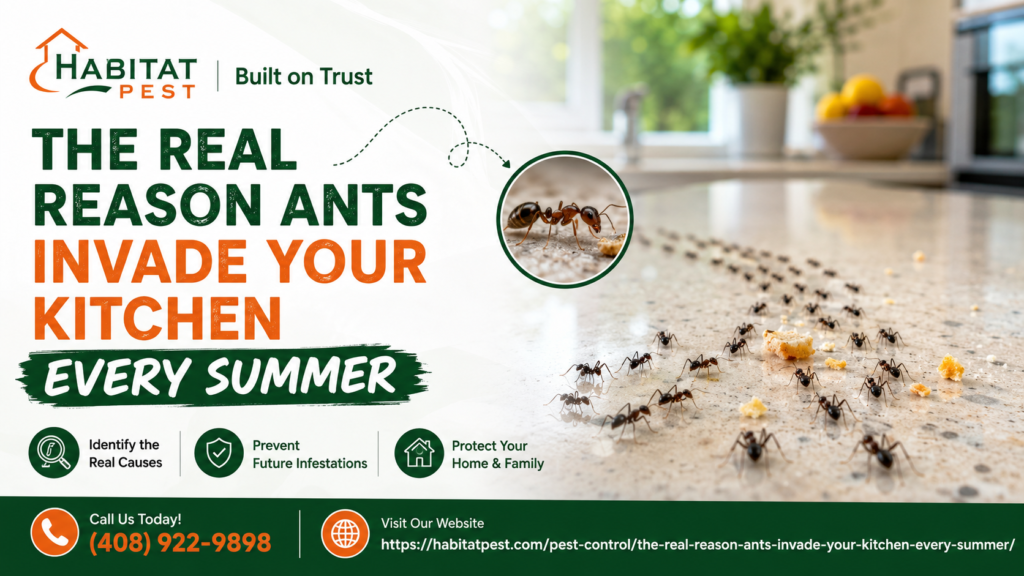
This part is kind of fascinating, once you get past the annoyance. Ants use a chemical trail system called pheromones. When one scout ant finds food, it heads back to the colony, leaving an invisible scent trail behind. Other ants follow that trail straight to the source. That’s why you often see ants moving in a very organized line. They’re all following the same chemical map.
This also explains why killing a few ants doesn’t solve the problem. The trail is still there. More ants just keep following it. You need to break the trail and remove the food source to actually stop the parade.
Entry Points You Probably Haven’t Noticed
Ants don’t need a door to walk in. They find their way through the tiniest gaps. Common entry points include small cracks in window frames, gaps around pipes under the sink, spaces along baseboards, and tiny holes where wires or cables enter the wall. Even a gap as thin as a sheet of paper is enough for most ant species.
In summer, outdoor ant colonies grow so large that they expand outward looking for new food sources. Your kitchen becomes an extension of their territory without you even realizing it.
The Type of Ant Matters
Not every ant invasion is the same. Different species behave differently, and knowing which type you’re dealing with changes how you handle it.
• Odorous house ants are the most common kitchen invaders. They love sweets and give off a coconut-like smell when crushed.
• Pavement ants usually enter through cracks in the floor or foundation and go after both sweet and greasy foods.
• Carpenter ants are bigger and more serious. They don’t eat wood, but they nest in it, which can cause structural damage over time.
• Argentine ants form massive super-colonies and are very difficult to control without professional help.
Identifying the species helps you understand where the nest is, what’s attracting them, and what removal method actually works.
Why DIY Fixes Often Fall Short
Spraying ant killer along the counter feels satisfying in the moment. But most store-bought sprays only kill the ants you can see. The queen and the rest of the colony are still deep in the nest, usually outside your home or inside a wall void. As long as the colony is alive, new worker ants will keep coming in.
Bait traps can work better because worker ants carry the bait back to the colony. But this takes time and requires patience. Also, using the wrong bait for the wrong species makes the whole effort useless. For example, sweet bait won’t attract carpenter ants as effectively as protein-based bait.
Habits That Make It Worse
A few everyday habits can make an ant problem go from small to out of control quickly. Leaving dirty dishes in the sink overnight is one of the biggest. Ants are most active at night, so even a few hours of exposed food scraps gives them plenty of time to find and map your kitchen. Storing fruits like bananas, apples, or peaches on the counter adds another easy food source.
In addition, forgetting to empty the trash regularly gives ants a full buffet just sitting in the corner.
Practical Steps to Make Your Kitchen Less Inviting
You can take real action to reduce the chances of an infestation. Store food in airtight containers, especially sugar, honey, and cereals. Wipe counters every night. Fix any leaky pipes or dripping faucets. Seal visible cracks around windows and baseboards using caulk. Take out the trash daily in the summer months. Keep pet food bowls clean and don’t leave them out overnight.
These steps won’t guarantee a zero-ant kitchen, but they’ll make your home far less attractive to ants. And if things still get out of hand, reaching out to an ant exterminator in San Jose is the smartest next move you can make.
Answers You Actually Need: Ant Facts, Entry Points, and Summer Fixes
Q1: Why do ants only seem to appear in summer and not in other seasons?
A1: Ant colonies are temperature-driven. In warmer months, queens lay more eggs, worker activity increases, and food demand goes up. Summer heat pushes ants to forage more aggressively, making your kitchen a prime stop on their route.
Q2: Can ants cause any real damage to my home?
A2: Most kitchen ants are a hygiene nuisance more than a structural threat. However, carpenter ants are different. They tunnel through damp or rotting wood to build nests, which can weaken walls, floors, and wooden structures over time if left unchecked.
Q3: How do I know if I have a nest inside my house or just ants coming in from outside?
A3: If you see ants consistently coming from the same spot, especially near walls, under sinks, or around window frames, there may be a nest inside. Ants from an outside colony usually follow a more varied trail and tend to appear near entry points.
Q4: Is it true that ants can smell food through sealed bags?
A4: Yes, ants can detect food through thin or loosely sealed packaging. They follow scent trails and can identify food sources through plastic bags. Hard-sided airtight containers are far more effective at blocking food smells.
Q5: How long does it usually take to get rid of an ant infestation?
A5: It depends on the size of the colony and the method used. Bait traps can take anywhere from a few days to a few weeks. A professional treatment is usually more thorough and can eliminate the colony faster, often within one or two visits.
Q6: Are there any plants or natural ingredients that repel ants?
A6: Certain scents like peppermint, cinnamon, and citrus can disrupt ant pheromone trails temporarily. Placing these near entry points can slow them down. That said, natural repellents rarely eliminate the root problem, especially if a large colony is already established nearby.
Q7: What’s the difference between ant removal in Saratoga and hiring a local exterminator?
A7: Ant removal typically refers to addressing the current infestation, eliminating visible ants, trails, and accessible nests. An ant exterminator in San Jose goes further, identifying species, locating hidden colonies, treating entry points, and preventing future activity through targeted products and follow-up.
Q8: Why do ants come back even after I’ve treated my kitchen multiple times?
A8: Repeated invasions usually mean the queen and the main colony have not been reached. Surface treatments kill worker ants but leave the colony intact. Until the nest is treated or the queen is eliminated, new workers will continue to emerge and search for food.
Time to Take Back Your Kitchen for Good
Ants are persistent, smart, and incredibly well-organized. Once they find a reliable food source, they don’t give it up easily. The good news is, once you understand why they’re coming in, you can make real changes that actually stop them. Seal up the gaps, cut off the food supply, and break those pheromone trails.
But if the problem keeps coming back no matter what you do, it’s time to bring in someone who knows exactly where to look. That’s where Habitat Pest Control comes in. Our team understands how ant colonies behave in this region, what species are most common, and what treatment approach works for each situation.
For reliable ant removal in Saratoga, Habitat Pest Control handles the job thoroughly, from finding hidden entry points to treating the colony at its source. No guesswork, no generic sprays, just a real solution that lasts.