
Summary
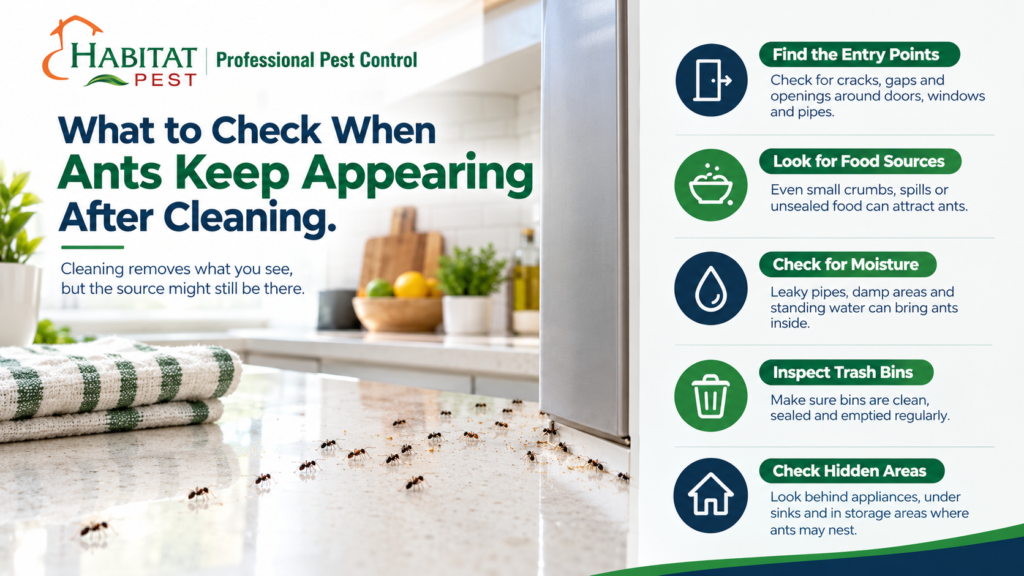
Wiping up a trail removes the ants you can see and the scent they follow, but it doesn’t close the gap they came through or change what’s drawing them in. Entry points, moisture, nests outdoors or inside the walls, and nearby plants often keep ants coming back. The six steps below show you where the trail really starts.
You clean the counter. The ants disappear. The next morning, there they are again, marching along the exact same line.
Cleaning takes care of the ants on the surface, but the nest is somewhere else. Many ants found indoors, including Argentine ants, the most common ant around California homes and gardens, nest outside and only come in to forage. Others can nest inside the house. UC IPM notes that some species set up in wall voids, under flooring, near hot water pipes, or in potted plants. Either way, the trail on your counter leads back to the colony.
Step 1: Leave the Trail Alone for a Minute
Before you wipe anything, watch. Note where the ants are heading (food, water, the trash can) and which direction they’re coming from. That one observation saves a lot of guessing later.
Step 2: Follow It to Where It Disappears
Ants like to travel along edges: baseboards, window frames, cabinet seams, pipes, and wires. Track the line until it vanishes. That point, maybe a crack by a window, a gap under a door, or the opening around a pipe under the sink, is very likely the way in.
A thin trail using the same opening every day tells you more than a crowd of ants wandering at random. If the trail disappears into a wall, under flooring, or into a potted plant rather than toward the outside, the nest may be indoors, which calls for a different approach than an outdoor colony.
Step 3: Go Outside to the Matching Spot
Walk around to the same section of exterior wall. Look for soil or mulch piled against the foundation, damp patches near sprinklers or downspouts, plants touching the siding, and wood or stones stacked against the house. With luck, you’ll spot the outdoor half of the trail running along the concrete.
Many Fremont yards put lawns, planted borders, patios, and irrigation right next to each other, which gives ants plenty of connected routes toward the house.
Step 4: Look for Water, Not Just Food
A spotless kitchen can still have ants. Sugary spills, pet food, and open pantry items matter, but so does water. Check under sinks, around plumbing, beside pet water bowls, and anywhere a leak has left things damp.
Ants turning up in a bathroom or laundry room are usually after moisture rather than crumbs.
Step 5: Check the Plants Along the Wall
Argentine ants feed on honeydew, the sugary liquid produced by aphids, scales, and mealybugs. They climb shrubs and trees to reach it, then use the same branches as a highway toward your house.
Look for steady ant traffic on plants beside the walls, clusters of small insects on new growth, or sticky leaves. UC IPM recommends keeping at least a one-foot gap between plants, grass, or mulch and the foundation.
Step 6: Switch From Spray to Bait
The ants on your counter are a small fraction of the colony. Spraying them kills those workers and leaves the nest untouched, so new workers simply pick up where the others left off.
Baits work differently. Workers carry slow-acting bait back to the nest, where it can reach the rest of the colony. UC IPM recommends baiting as part of household ant management and notes that results aren’t immediate. Species matters too, because different ants are drawn to different baits.
What Cleaning Can and Can’t Do
Cleaning still matters. Soapy water wipes out the scent trail, and sealed food containers take away the reward.
What cleaning can’t do is close an opening, dry out a damp wall, or reach a nest outside. If ants keep coming back to a clean kitchen, one of those three is usually the reason.
FAQ: Recurring Ant Trails
Q1. Can a clean home still have an ant problem?
A1. Yes. Ants also come in for water and shelter, and many nest outside and simply forage indoors.
Q2. Do ants inside mean there’s a nest in my walls?
A2. Not always. Many of the ants you see indoors nest outside and only come in to forage. Some will set up temporary nests in wall voids, under flooring, or in potted plants, particularly during bad weather.
Q3. How long does ant bait take to work?
A3. It depends on the species, the bait, and where it’s placed. Some baits take several days or longer before activity drops noticeably.
Q4. Why do ants get worse after rain or during hot spells?
A4. Heavy rain and hot, dry weather can both push outdoor ants inside looking for shelter or water.
Q5. Are store-bought sprays a bad idea?
A5. They kill the ants you see but rarely reach the nest. Spraying near bait can also stop ants from carrying the bait back to the colony.
Q6. Will caulking the entry point fix the problem?
A6. It helps, and sealing cracks is part of UC IPM’s advice for keeping ants out. Ants are persistent, though, and often find another gap nearby, so sealing works best alongside baiting and removing food and water.
Q7. When do ant control services make sense?
A7. When you can’t find the entry point, ants are showing up in several rooms, or trails keep returning after you’ve cleaned, sealed gaps, and removed food and water. A technician can also work out whether the colony is indoors or outside and which condition is feeding the activity. Habitat’s ant control services start with that inspection.
If the Trail Keeps Winning
If the ants keep finding their way back, Habitat Pest Control can help. Our pest control work around Fremont starts with figuring out where the ants are coming from, not just treating the ones on the counter.