
Summary
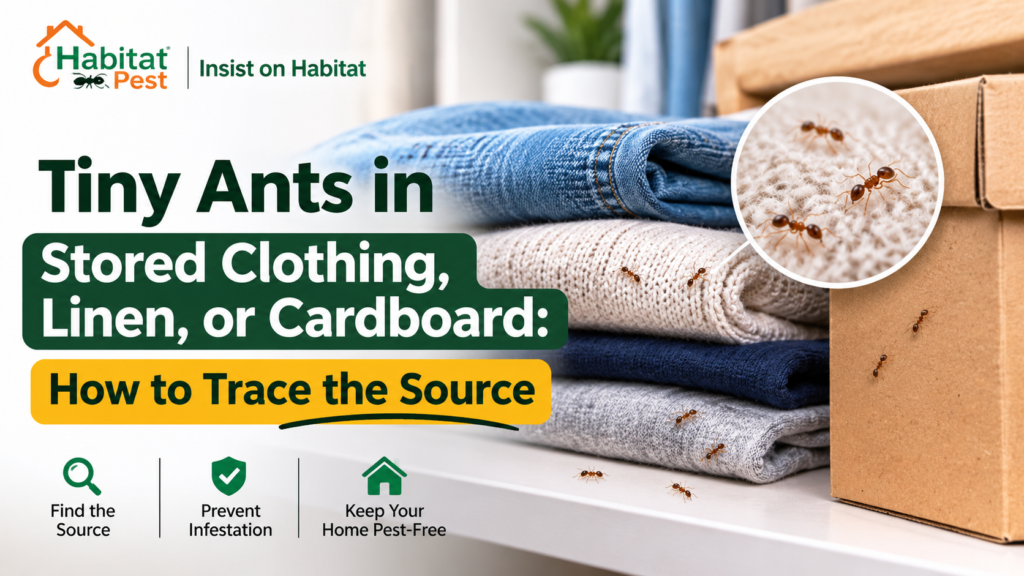
Tiny ants around stored clothing, clean linen, or cardboard boxes usually point to a nearby trail or attractant, not a problem with the fabric itself. Learn how to follow their movement, check shelves and wall gaps, clean affected items, and spot moisture. These steps help San Jose homeowners decide when professional ant control is worth considering in their own homes.
Why Are Tiny Ants Turning Up in Storage?
A few tiny ants between folded towels can make a tidy linen closet feel suddenly suspect. Yet clothing is rarely their food source. The insects may be following an old crumb, moisture near a pipe, or a route hidden behind a shelf.
In San Jose homes, a storage closet may sit beside a garage, bathroom, or exterior wall. Any of these areas could help explain how the ants reached your belongings. A smarter approach to ant control begins by tracing where the insects enter, rather than simply removing those gathered around your belongings.
The Fabric May Not Be the Problem
Ordinary clean fabrics are not typical food sources for household ants. Food residue, nearby moisture, or a sheltered route may better explain their presence.
A gym bag, an unwashed kitchen towel, or a box holding snack wrappers could leave traces of food. Even a small sticky residue may attract foraging ants. Moisture also deserves attention, particularly in cabinets near plumbing or damp walls.
Ants may travel along cardboard seams or shelter in spaces beneath stored boxes. Finding them there does not establish that the cardboard contains a colony.
Follow the Trail Before Moving Everything
Resist the urge to empty the entire closet immediately. Watch the ants briefly and note their direction. Are they moving toward the wall, disappearing beneath a shelf, or heading toward the floor?
A clear line of ants may lead to a gap near a baseboard, a pipe opening, or another room. Scattered ants may be searching for food or a route, so their movement might take longer to interpret.
Use a flashlight to inspect the back corners and the narrow spaces between furniture and walls. Take a photo of the trail before disturbing it. Avoid opening wall cavities or removing electrical fittings to follow insects into inaccessible spaces.
The entry point and the nest are not always in the same place. Ants may travel indoors from an outdoor colony, so the route can provide a better clue than the spot where you first noticed them.
Four Places Worth Checking
A targeted inspection is more useful than searching every item in the house. Start with the immediate storage area, then expand the search if the trail continues.
· Folded clothes and linen: Look for food marks, damp patches, or ants tucked into folds. Pay extra attention to items stored after outdoor activities, cooking, or meals.
· Cardboard packaging: Examine seams, flaps, and the underside of boxes. Look for moisture damage, crumbs, or insects moving along the edges.
· Closet and cabinet joints: Check screw holes, shelf brackets, rear panels, and the point where the cabinet meets the wall. These narrow spaces can conceal a trail.
· Nearby walls and floors: Inspect baseboards, pipe openings, window edges, and the area beneath the closet. A trail may continue well beyond the storage unit.
If the ants vanish behind a fitted cabinet, make a note of the location instead of taking the unit apart. The observation may be useful during a professional inspection.
Clean the Belongings Without Spreading the Ants
Inspect affected belongings before moving them elsewhere, as hidden ants could spread to another room. Check fabrics for insects and visible contamination. Launder items with food residue or dirt when appropriate, following their care labels. Clean, unaffected belongings generally do not need washing simply because ants were found nearby.
Vacuum shelves, corners, and accessible cracks where ants are traveling, then empty the vacuum contents into a sealed bag and dispose of them promptly. Wipe hard surfaces with soapy water to remove food traces and the scent trails ants use to navigate. Replace damp or damaged cardboard with clean, dry storage containers after inspecting their contents.
Follow pesticide label directions, including permitted application areas and precautions involving children, pets, food, and stored fabrics. Do not combine pest-control products unless their labels specifically allow it. Cleaning and tracing the route should come before using pesticides indiscriminately.
What If the Ants Keep Returning?
A closet may look spotless, yet the insects reappear a few days later. Returning ants may indicate that an entry route remains open, an attractant is still present, or workers continue arriving from a nearby colony. Repeat sightings alone cannot establish which explanation applies.
Spraying the ants you see often provides only temporary relief. The University of California Statewide Integrated Pest Management Program’s guide to household ants recommends identifying entry points, removing food sources, and combining prevention with appropriate control methods rather than relying on indoor sprays alone.
Avoid guessing the species from size alone. Different ants respond to treatments in different ways, and a trail in a bedroom does not prove the nest is inside the bedroom wall. Repeated activity in several rooms, ants emerging from an inaccessible gap, or trails that continue despite cleaning all justify a closer look.
Local Clues Around San Jose Homes
The surroundings of your closet may reveal how ants are getting inside. San Jose homes with attached garages, nearby landscaping, or irrigation systems can have potential entry routes. Apartments and townhomes present different challenges, especially when ants travel along shared walls or utility openings.
Check these areas for possible entry points:
· Garage entrances: Look for trails near door frames, floor edges, and wall joints.
· Irrigation lines: Check for moisture and gaps where pipes enter the building.
· Landscaping: Watch for ant activity around damp soil, plants, and foundation edges.
· Shared walls: Inspect visible cracks and utility openings in apartments or townhomes.
Repair leaks and seal confirmed entry gaps when appropriate, but avoid closing unfamiliar openings without checking their purpose. Hidden colonies or inaccessible routes may require professional assessment.
When to Contact a Professional
Get help if the trail returns after cleaning, spreads to multiple rooms, or disappears into a wall or built-in cabinet. Professional identification also matters when the ants are so small that you cannot confidently tell which species you are dealing with.
Habitat Pest Control serves San Jose and surrounding Bay Area communities. Its ant-control approach includes inspection and targeted treatment based on the pest activity and property. Homeowners dealing with persistent trails around closets, stored linens, or cardboard can consider Habitat’s ant control service.
Sharing your observations can help the technician focus on the right areas. Mention which closet was affected, how often ants appear, where they travel, and any cleaning or pest products you have already used.
Make the Next Inspection Count
Before returning everything to the closet, check that the storage area is dry, the contents are clean, and the route has been traced as far as safely possible. Keep a photo of the trail if you need to compare activity later.
Recurring ants are a reason to investigate the source, not to keep treating the same shelf. Habitat Pest Control can help homeowners assess persistent ant activity and identify a suitable next step.
Questions Homeowners Ask About Ants in Storage
Q1. Can ants hitch a ride when I move cardboard boxes?
A1. Yes. Ants may travel on or inside packaging as it is moved. Inspect boxes and their contents before transferring them to another room or storage location.
Q2. Should I wash every item in a closet after seeing ants?
A2. Not necessarily. Inspect affected belongings and remove any ants. Launder fabrics with food residue or other contamination according to their care labels. Clean items that were not affected generally do not require washing.
Q3. Can tiny ants be identified by their size alone?
A3. No. Several species are very small and look similar to an untrained observer. A clear photo and details about where the ants travel can help with identification.
Q4. Do ants build nests in cardboard boxes?
A4. Some ants may use protected spaces in stored materials, but a box full of ants does not prove a nest is inside. Inspect the surrounding shelves, walls, and floor to look for the source.
Q5. Is it safe to seal a crack where ants disappear?
A5. Seal a suitable entry gap after checking that it is not needed for wiring, plumbing, or ventilation. Persistent activity inside a wall may need inspection before the opening is closed.
Q6. Can ants spread from a closet into a bedroom?
A6. Yes. Ants can travel along baseboards, floor edges, and other narrow routes between rooms. Activity in two places may come from the same trail.
Q7. Should I use scented oils inside my linen closet?
A7. Scented oils are not a reliable way to remove a colony or stop ants from entering. Some can stain fabric, so focus on cleaning, dry storage, and identifying the route.