
Summary
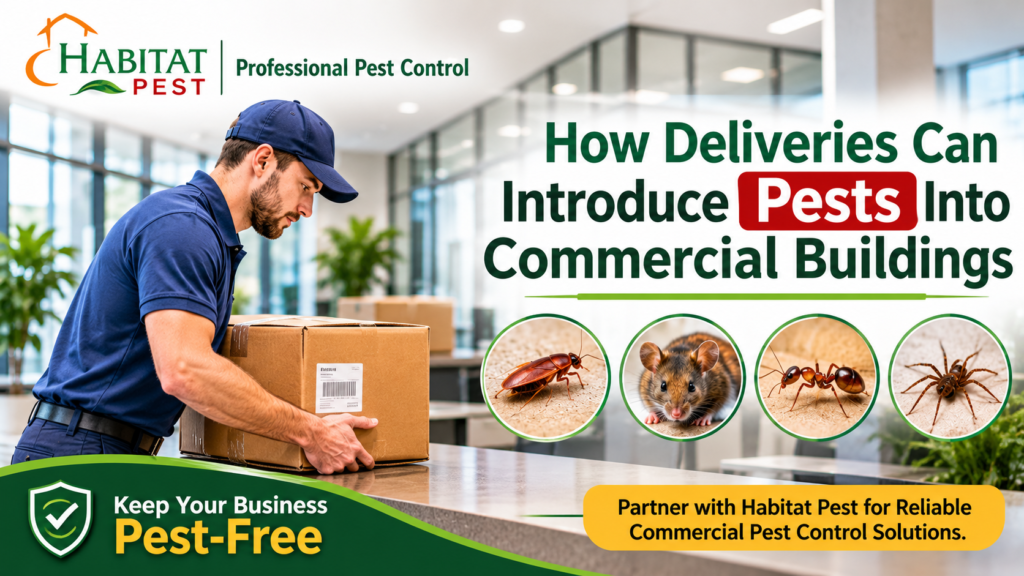
Cockroaches, rodents, and pantry pests can ride into a business inside cardboard boxes, on pallets, in food packaging, or in the delivery truck itself. Following a shipment from the truck to the shelf shows where the risks are, and a consistent receiving routine helps staff spot problems before products reach storage. Commercial pest control can help when activity around deliveries keeps returning.
Santa Clara County’s food-safety guidance asks food facilities to do something simple: inspect incoming deliveries, especially cardboard boxes, for signs of rodents or insects, and get rid of cartons promptly. There’s a good reason for it. Pests regularly hitch a ride into businesses inside packaging, on pallets, and in delivery trucks.
The easiest way to see the risk is to follow one shipment from the moment it arrives.
Before the Doors Open: The Truck
Trailers move between many warehouses and facilities. Food residue, debris, or an existing pest problem inside a vehicle can travel with every load it carries.
When the doors swing open, take a quick look at the floor and walls of the trailer. Droppings, live or dead insects, or nesting material are a sign to slow down and check the load more carefully before unloading continues.
At the Dock
Docks stay busy. Doors are open for long stretches, trucks come and go, and shipments sit near the entrance while staff sort them. That gives flying insects an open door and gives rodents a chance to slip inside toward food, waste, or shelter.
Worn door seals and debris around the dock make it worse. Closing doors when practical and sweeping the area at the end of each receiving window goes a long way.
Opening the Cartons
Corrugated cardboard has folds, seams, and hollow channels where cockroaches and other insects can sit unnoticed. Check the bottom of each carton, the seams, the corners, and any crushed or damaged sections before boxes head to storage.
Empty boxes should be broken down and taken out quickly. Stacks of cardboard in a back room turn into long-term shelter.
Breaking Down the Pallet
Pallets pass through several warehouses before they reach you, picking up dirt, moisture, and debris along the way. Look underneath and around the edges for droppings, gnaw marks, webbing, or wet and torn packaging. Pallets that arrive wet, heavily soiled, or damaged need extra attention.
Putting Away Food Products
Some stored-product pests, like pantry moths and flour beetles, can already be inside packaged goods when they arrive. Watch for webbing, small holes, powdery residue, or broken seals.
Food that may be contaminated should not be used. Set it apart from the rest of the stock and report it to the manager responsible for receiving, who can reject the delivery or arrange disposal. The county’s food-safety manual is clear that food contaminated by insects or rodents must be discarded.
Nobody needs to treat every shipment as contaminated. Catching obvious problems at the door won’t stop every pest, but it lowers the chance of carrying them into storage.
A Week Later: Why the Source Is Hard to Find
Once a shipment is unpacked, its contents scatter into dry storage, prep areas, retail shelves, production rooms, and back offices. By the time someone spots a cockroach or rodent days later, the packaging is gone, the pallet is broken down, and the trail is cold.
Deliveries also aren’t the only way in. Open dock doors, wall gaps, outdoor dumpsters, and clutter can all bring pests in separately. A cockroach near a storage shelf could have come in with a box, through a doorway, or along a pipe.
A Receiving Checklist Staff Can Actually Use
1. Glance inside the trailer before unloading.
2. Check carton bottoms, seams, and corners.
3. Look under and around every pallet.
4. Set aside wet, damaged, or suspicious items, don’t use them, and report them to the responsible manager.
5. Break down empty cardboard the same day.
6. Log anything unusual with the date and supplier.
Fit it to the business. A restaurant taking food deliveries several times a week faces different risks from a warehouse moving pallets of hardware.
If Activity Keeps Showing Up Near Deliveries
Repeated sightings around incoming goods usually point to more than one bad box. Santa Clara County’s Vector Control assessment lists roof rats as the county’s most abundant rodent pest and notes cockroach activity tied to indoor and public sewer systems. It also names sanitation, exclusion, and ongoing facility maintenance as key parts of cockroach management.
That means the fix often involves the building as much as the shipments. For businesses in Santa Clara dealing with this, Habitat Pest Control can help track down and address the conditions behind it.
Delivery and Pest FAQs
Q1. Can clean-looking boxes still carry pests?
A1. Yes. Insects can hide in the folds, seams, and channels of cardboard even when the outside looks fine.
Q2. Which pests most often arrive with deliveries?
A2. Cockroaches, rodents, and stored-product pests such as pantry moths and flour beetles are the usual culprits, particularly in food shipments and cardboard.
Q3. What should staff do after finding pests in a shipment?
A3. Don’t use the product. Separate it from other stock, note or photograph what was found, and report it to the manager responsible for receiving so the delivery can be rejected or the product disposed of. Check nearby products as well.
Q4. Is it worth keeping a log of what turns up at receiving?
A4. Yes. A simple record of the date, supplier, and what was found makes patterns easier to spot, like one supplier or one delivery day that keeps causing trouble.
Q5. Can one bad delivery spread pests through a building?
A5. It can. Once the contents are distributed, pests can move well away from the receiving area and become much harder to trace.
Q6. When should a business bring in commercial pest control?
A6. When sightings keep recurring, pests turn up around deliveries more than once, or there are signs of rodents or cockroaches in storage or food areas.